
Business
Nigeria risks sustainability crisis as debt mounts

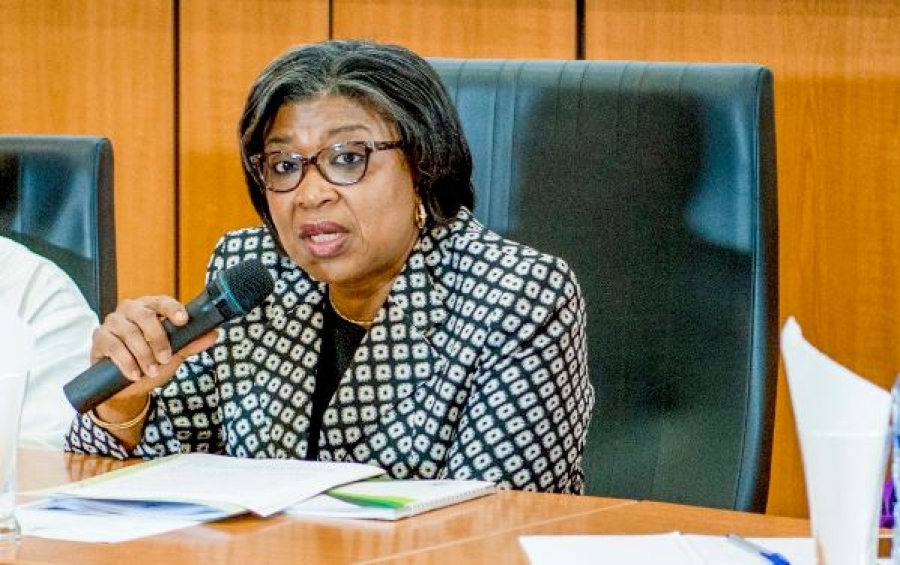
The Director-General of the Debt Management Office, DMO, Patience Oniha says Nigeria risked the debt sustainability issue if it failed to grow the current low revenue profile, which places the country in the poorest category among its peers.
Oniha, who disclosed this in a virtual media chat, said the country’s public debt stock stood at N35.465 trillion as of June 30.
“We should focus on revenue. The good thing about it is that the Minister of Finance, Budget and National Planning has started a programme aimed at growing the revenue profile. We must discipline ourselves to follow through to grow our revenue. If we continue to borrow and do nothing about growing our revenue base as other countries have done, we may have a debt sustainability challenge,” she said.
READ ALSO: Nigeria spends N1.21trn to service debts in 6 months, says DMO
As of March 31, 2021, Nigeria’s total public debt stock was N33.107 trillion, or USD87.239 billion. Between the end of the first quarter and the end of the second quarter, the debt stock increased by N2.358 trillion.
The DG explained that the issues of rising debt, high debt service to revenue ratio and utilization of borrowed funds were germane.
She said that members of the public should not lose sight of the facts which necessitated borrowing which included: “Huge Infrastructure Deficit, Recession (twice in the last six years), Consecutive Budget Deficits, Low Revenue Base, compounded by dependence on one source – crude oil – which prices crashed and at a point, at the peak of the COVID-19 pandemic had no buyers.”
Ms. Oniha stressed that Nigerians must challenge themselves and support the federal government on the need to raise revenue.
READ ALSO: Nigeria’s debt to China under Buhari administration hits $2.02bn
She noted that the 5% tax as a percentage of the Gross Domestic Product (GDP) was too poor for Nigeria and that concerted efforts must be made to increase the nation’s revenue.
The external debt, according to a breakdown of the national debt under review, was N13.711 trillion, or 38.66%. Domestic debt, on the other hand, was N21.754 trillion, accounting for 61.34% of the entire stock.
The Federal Government was responsible for N11. 828 trillion in foreign debt and another N17. 632 trillion in domestic debt. The external debt of states and the FCT was N1.883 trillion, with a domestic debt stock of N4.122 trillion.
The breakdown of external debt revealed that multilaterals (World Bank Group and African Development Bank Group) owe the majority of the debt, accounting for 54.88%.
Commercial debt (Eurobonds and Diaspora bonds) came in second with 31.88%, followed by bilateral debt (China, France, Japan, India, and Germany) with 12.70%. Promissory Notes account for 0.54% of the total.


-
 Latest6 days ago
Israel marks 3 years since October 7 Hamas attack amid Gaza strikes, election debate
-
 Energy6 days ago
Fuel Battle: Dangote, marketers and government clash over petrol imports
-
 Energy7 days ago
Petrol, diesel prices rise 86% in 2026 as costs hit fresh highs
-
 Energy1 week ago
Has Iran lost control of the Strait of Hormuz? Oil flows rebound as war disruptions persist
-

 Football7 days ago
Nigeria’s World Cup exit under spotlight as FIFA’s DR Congo files emerge
-
 Latest7 days ago
US Court set to rule on release of FBI, DEA records on Tinubu
-

 Latest16 hours ago
Full List: Meet the 2026 Nobel Prize winners across six categories
-

 Business7 days ago
Nigerian investors at a crossroads as fixed-income yields slide