
News
Only 16 women make it to 10th National Assembly

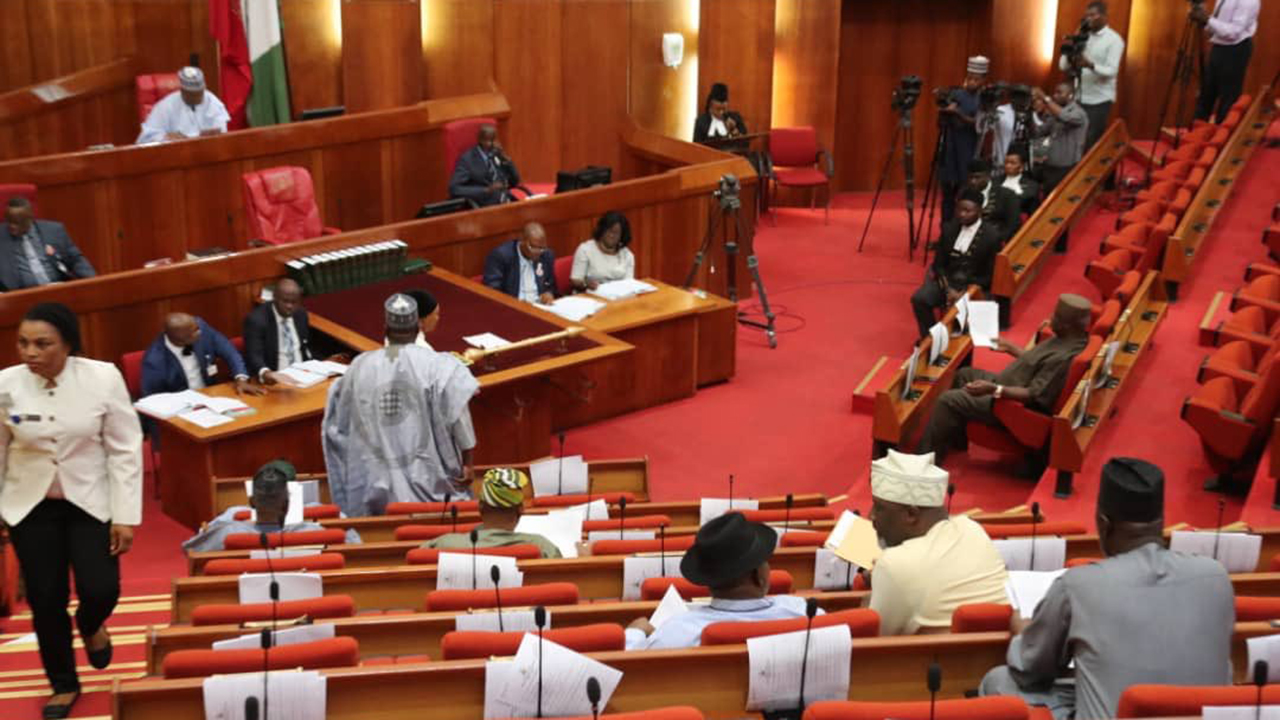
Only 16 female legislators made the list of successful names published by the Independent National Electoral Commission (INEC) as legislators in the incoming 10th National Assembly following the February 25 elections.
While there are three female senators-elect, a total of 13 female House of Representatives members made it to the new list.
The three senators-elect are Labour Party’s Kingibe Ireti Heebah representing the Federal Capital Territory; Peoples Democratic Party’s Banigo Ipalibo Harry, representing Rivers West and Adebule Idiat Oluranti of the All Progressives Congress representing Lagos West.
The 13 House of Reps members include Orogbu Obiageli (LP), Nnabuife Chinwe Clara (YPP), Gwacham Maureen Chinwe (APGA), Ebikake Marie Enenimiete (PDP), Akume Regina (APC), Onuh Onyeche Blessing (APC), Zainab Gimba (APC), Ibori-Suenu Erhiatake (PDP), Onuoha Mariam Odinaka (APC), Benj Butmak Lar (PDP), Goodhead Boma (PDP), Bukar Abah Ibrahim Khadijat Waziri (APC) and Fatima Talba (APC).
READ ALSO: APC assembles Presidential Election Petition Legal Team
This development was against the clamours for increased participation as well as appointments for women in politics.
Pre-election discussions were in part reflective of the need for gender balance in politics, as several presidential candidates harped on women inclusion and political participation.
The Labour Party presidential candidate, Peter Obi, at the Voice of Women (VOW) 2022 conference and awards, held in Abuja, decried the palpable exclusion of women from politics and its attendant implications for the country.
Obi, who said the country was collapsing and women could not be ignored, noted: “If anyone says to you that they want to rule this country, let them show you their past record on women’s representation and competency.”
The former Anambra State Governor argued that for the country to move forward, women must be engaged in governance and decision-making as antecedents had shown that they can manage finances better.
The Minister of Women Affairs, Pauline Tallen, had similarly identified the low number of women in politics and other leadership positions as a major setback to the country’s development.
READ ALSO: Abia community women protest National Assembly polls result
The Minister, who stated this at a news conference in Abuja last year, harped on the status of women inclusion, participation in governance, both at the state and subnational levels.
She stated that the inadequate number of women in decision-making positions explained the country’s low investment and slow progress in some of the crucial sectors of human development outcomes.
“For instance, currently in the House of Representatives, out of 360 members, only18 are women, representing about 4.61 per cent; Senate has eight women out of 109 members, representing 7.34 per cent.
“The same trend, even worse, runs down all levels of governance in the states and local government areas. Available data from 12 out of 36 states are a clear demonstration of the injustice perpetuated in the election and appointment of women.
“It is evident that women have been short changed. Out of 36 states of the federation there are no female governors, only two female deputy governors”, Tallen noted.


-
 Latest5 days ago
Full List: Meet the 2026 Nobel Prize winners across six categories
-

 Football5 days ago
Premier League Matchweek 7: Five Fixtures That Could Shape the Weekend
-
 Latest4 days ago
Umahi defends Lagos-Calabar highway route changes amid public outcry
-

 Business3 days ago
Dangote Refinery IPO: 70% Subscription claim meets fourfold demand assertion as investors seek clarity
-
Business4 days ago
Dangote Refinery IPO Extension: Was the 70% subscription report overhyped?
-
 Latest2 days ago
UCTH faces morgue crisis as 50 unclaimed corpses await mass burial
-
 Featured4 days ago
El-Rufai, ADC governorship candidate’s court appearance puts Kaduna opposition politics in focus
-

 Business2 days ago
BREAKING: Nigeria’s Inflation Rate Drops to 14.63% in September