
Crime
UN rights body examines Nigeria

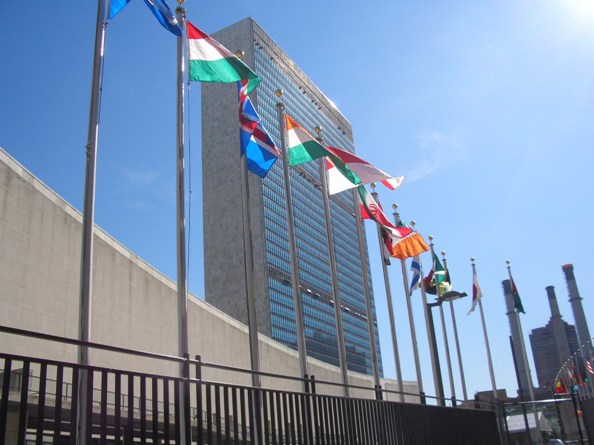
UN highest human rights body, the Human Rights Council (HRC), will start reviewing the track records of Nigeria and 13 other countries on Monday.
The process is called, Universal Periodic Review (UPR), and the ultimate goal is to improve human rights situation for people around the globe.
The UPR review sessions take place for two weeks, three times a year, and 14 countries are reviewed in each session – a total of 42 per year.
This time, the countries will be reviewed in this order: Saudi Arabia, Senegal, China, Nigeria, Mexico, Mauritius, Jordan, Malaysia, the Central African Republic, Monaco, Belize, Chad, Congo and Malta.
Every four and a half years, the 193 UN Member States undergo interactive review of human rights situation in their countries on rotational basis.
The idea is to give equal treatment to all the countries and allow them to exchange best practices.
The Human Rights Council was created in 2006 as part of a general wave of reforms of the UN system, composed of 47 Member States, elected by the UN’s 193 Member States.
However, any country can take part in the discussions held during a review; each state review is led by group of three countries (known as “troikas”), randomly chosen.
Information and evidence are presented, and questions are asked by special independent experts (called ‘Special Rapporteurs’), and the UN’s Member States.
Civil-society organisations can also submit questions and evidence through country representatives.
The country under review is given a chance to explain the actions they have taken, or plan to take, to address the issues presented.
Recommendations are officially made, and technical assistance provided where needed, with each country’s review lasting about three and a half hours.
The UPR assesses the human rights obligations set out in the UN Charter, the Universal Declaration of Human Rights, the human rights treaties ratified by the reviewed Member State, and International Humanitarian Law.
A report is prepared by the troika with the involvement of the reviewed Member State and technical assistance from the UN Office of the High Commissioner for Human Rights (OHCHR).
This report provides a summary of the actual discussion, with the questions, comments and recommendations made, as well as the responses by the reviewed Member State.
The report is discussed a few days after the review and adopted at a plenary session of the Human Rights Council.
The reviewed State has the primary responsibility to implement the recommendations contained in the final report.
Countries are expected to provide information on what they have been doing to make changes during their review, as well as on any developments on human rights when they undergo their UPR.
The international community and OHCHR are to assist and provide technical assistance, in consultation with the country concerned.
The Human Rights Council can take series of measures, such as specific investigations and can set up dedicated committees to put pressure on non-cooperating Member States, and draw the world’s attention to them.


-
 Featured1 week ago
Inside INEC’s race to prepare for Nigeria’s 2027 elections
-
 Featured1 week ago
2027: APC unveils nationwide campaign timetable, Tinubu to rally in 12 states
-
 Business5 days ago
Naira faces exchange rate gap as Dollar hits N1,380 on parallel market
-
 Business1 week ago
Court dismisses ₦170m Trade Fair contract claim, says Zenith Bank was not a party
-

 Latest1 week ago
Breaking: NNPCL raises petrol price to ₦1,405 per litre amid discount controversy
-

 Football2 days ago
Man United shortlist Emery, Nagelsmann as potential replacements for Carrick
-

 Business2 days ago
Hoodlums raid JED Benue office, abduct 10 staff over power dispute
-
 Featured1 day ago
BREAKING NEWS: Shouts of joy rock the world as Pastor Chris opens final Healing Streams edition for 2026