
Featured
US lawmakers approves President Trump’s impeachment resolution

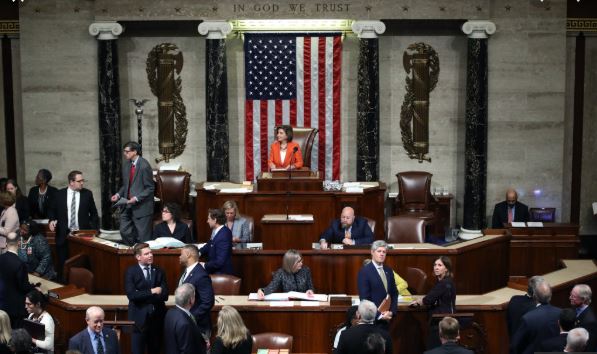
The U.S. House of Representatives with a final vote of 232-196 passed a resolution Thursday that formalizes the next steps in the impeachment inquiry of President Trump.
The measure, which came after weeks of Republican criticism of Democrats for conducting their interviews behind closed doors, signals the beginning of public hearings in which staff counsel for both parties will be given equal time to question witnesses.
“Sadly, this is not any cause for any glee or comfort. This is something that is very solemn, that is something prayerful and that we had to gather so much information to take us to this next step,” said Speaker Nancy Pelosi on the House floor prior to the vote, adding,
Since late September, House Democrats have been building their case that Trump abused his powers as president by asking the president of Ukraine to announce an investigation of one of his political rivals, former Vice President Joe Biden, and to cooperate with Trump’s lawyer Rudy Giuliani to validate a right-wing conspiracy theory about the 2016 election.
A July 25 phone call between Trump and President Volodymyr Zelensky alarmed multiple U.S. government officials and sparked a whistleblower complaint.
In closed-door interviews conducted by the House Intelligence Committee, witnesses have testified that nearly $400 million in military aid was withheld by the Trump administration to compel the government in Kiev to comply.
The aid was eventually released.
Republicans in the House sought to portray the impeachment inquiry as politically motivated.
“Democrats are trying to impeach the president because they are scared they cannot defeat him at the ballot box,” said House Minority Leader Kevin McCarthy, R-Calif. “Why do you not trust the people?”
Democrats countered that suggestion by keeping the focus on the president’s efforts to procure an investigation of his political rival from a foreign power.
The resolution clears the way for Republicans to call witnesses to appear before the Intelligence Committee, though they must first submit written justification for those they wish to question.
Democrats, who have presided over the committee since retaking control of the House in the 2018 midterm elections, can deny Republican requests.
The White House has blocked testimony by several witnesses called by House Democrats, and the resolution provides Nadler with a mechanism to enforce future compliance.
Should the House vote to impeach Trump, the U.S. Senate will conduct a formal trial that could lead to his removal from office. In that setting, lawyers representing the president will have greater leeway to call witnesses and cross-examine those who helped House Democrats make their case against Trump.













-
 Latest5 days ago
Israel marks 3 years since October 7 Hamas attack amid Gaza strikes, election debate
-

 Energy5 days ago
Fuel Battle: Dangote, marketers and government clash over petrol imports
-

 Energy6 days ago
Petrol, diesel prices rise 86% in 2026 as costs hit fresh highs
-

 Energy7 days ago
Has Iran lost control of the Strait of Hormuz? Oil flows rebound as war disruptions persist
-

 Football6 days ago
Nigeria’s World Cup exit under spotlight as FIFA’s DR Congo files emerge
-

 Latest6 days ago
US Court set to rule on release of FBI, DEA records on Tinubu
-

 Business6 days ago
Nigerian investors at a crossroads as fixed-income yields slide
-

 Business7 days ago
LoveWorld Trade and Investment Forum to Convene Business Leaders in Accra