
Crime
Army raids suspected hideout in Lagos, arrests 24 foreign nationals

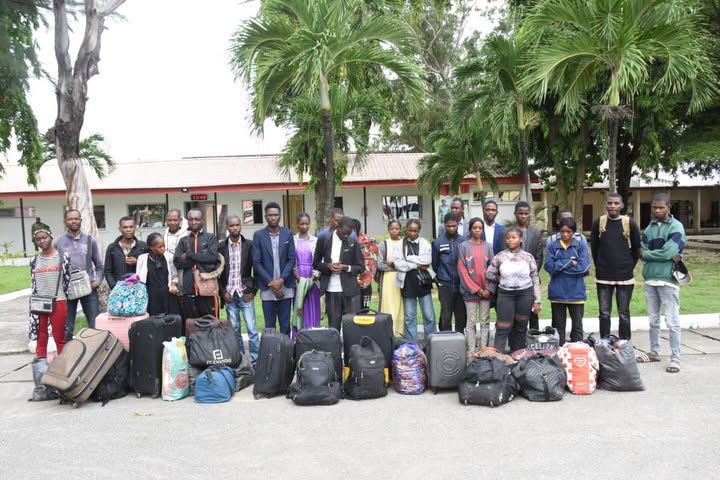
Troops of the 65 Battalion, 81 Division of the Nigerian Army have arrested 24 foreign nationals during a raid on a suspected hideout in Epe Local Government Area of Lagos State.
The operation, conducted in collaboration with members of a local vigilante group, followed credible intelligence on the presence of undocumented foreign nationals within the division’s area of responsibility.
This was disclosed in a statement issued by the Acting Deputy Director of Army Public Relations, 81 Division Nigerian Army, Lieutenant Colonel Musa Yahaya.
According to the statement, the suspects were apprehended at a fenced compound located in Imokun, along the Odo-Noforija/Poka axis of Epe.
The Army said the 24 suspects comprise 15 males and nine females from six West and Central African countries.
READ ALSO: Oyo Police rescue kidnapped five-year-old girl, arrest two suspects after ₦1m ransom payment
A breakdown of their nationalities shows that 10 are from Cameroon, six from Togo, three from Côte d’Ivoire, three from the Benin Republic, one from Burkina Faso and one from Guinea-Bissau.
The Army said the suspects have been handed over to the Nigeria Immigration Service (NIS), Lagos State Command, for further investigation, profiling and other administrative procedures in accordance with Nigeria’s immigration laws.
It added that investigations are continuing to determine the circumstances surrounding their presence in the country and establish whether any immigration or other laws were violated.
The statement further disclosed that security agencies are making efforts to identify and question the owner of the property where the foreign nationals were found as part of ongoing investigations.
The Nigerian Army reaffirmed its commitment to working with other security agencies and local communities to strengthen internal security and tackle illegal migration, transnational crime and other activities that could threaten national security.


-

 Health3 days ago
ISRT 2026: Global experts converge in Lagos to advance cancer care across Africa
-

 Football4 days ago
Ballon d’Or 2026: The key rules shaping the race for football’s biggest prize
-

 Entertainment6 days ago
Miss World 2026: Four Continental winners battle for automatic top 20 spot (VIDEO)
-

 Business4 days ago
Versat Automobile to launch Chery’s EXEED premium brand in Nigeria
-

 Entertainment6 days ago
Miss World 2026: Meet 24 African Contestants Flying Continent’s Flag in Vietnam(VIDEO)
-

 Comments and Issues4 days ago
Digital Rights and the 2027 Poll in Nigeria
-

 Football4 days ago
Yaya Touré makes history as Slovan Bratislava reaches Champions League league phase
-

 Energy5 days ago
Petrol Price War: Where are Nigerians getting the cheapest fuel?