
Latest
Africa must develop its own democratic model, says Obasanjo

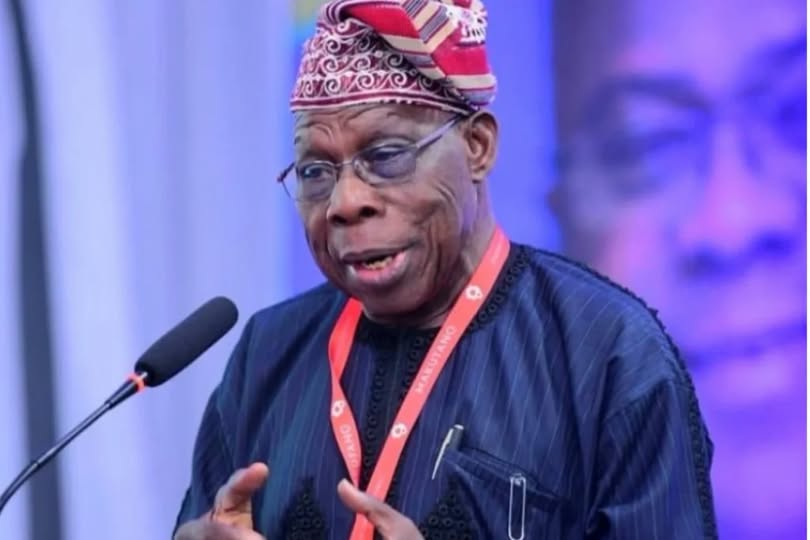
Former President Olusegun Obasanjo has called for a fundamental overhaul of the democratic system practised in Africa, arguing that the Western liberal model adopted by many countries on the continent has failed to adequately reflect their history, cultures and social realities.
Obasanjo made the call on Tuesday at the 2026 Goodluck Jonathan Foundation Democracy Dialogue in Bauchi, where he questioned the wisdom of transplanting political structures developed in Western societies into African countries without adapting them to local circumstances.
According to the former president, Africa’s democratic experience has produced a “winner-takes-all” political culture in which a candidate can win by a narrow margin and subsequently exercise control over virtually every aspect of governance, while those who lose elections are largely excluded from meaningful participation.
“The democracy we practice has no African context, no African content,” Obasanjo said.
He compared the system to wearing a garment that had not been tailored to fit, arguing that political institutions must take account of the peculiarities of the societies in which they operate.
Beyond Winner-Takes-All Politics
Obasanjo said the concept of opposition in many African countries had also evolved differently from the Western idea of a “loyal opposition.”
He argued that political opponents are frequently treated as enemies whose influence must be eliminated rather than as participants in a democratic system.
“In practice, we have winner takes all, first past the post. If you beat me by one vote then you take it all and whatever I have does not matter,” he said.
READ ALSO: Obasanjo’s Abeokuta summit ignites fresh talks of opposition realignment
The former president urged African countries to develop mechanisms that promote inclusion and ensure that electoral victories do not translate into the complete exclusion of competing political interests.
Diversity as a Democratic Asset
Obasanjo also stressed the need for Nigeria and other African countries to manage their diversity more deliberately.
He described pluralism as an essential feature of African societies and warned against allowing ethnic, religious and cultural differences to become instruments of political division.
“That diversity must be nourished and be taken care of,” he said.
For Nigeria, he argued, diversity is not an accidental feature of the country but fundamental to its existence and must therefore be accommodated within its political system.
Money, Poverty and Political Participation
The former president also raised concerns about the growing influence of money, inducements and vote-buying in African politics.
He linked the increasing role of money in elections to wider socioeconomic challenges, particularly poverty and illiteracy, which he said could leave voters more susceptible to manipulation.
Obasanjo argued that democratic reform cannot be separated from efforts to improve citizens’ economic conditions and access to education.
He also criticised the poor representation of women in Nigerian politics, pointing out that the country has not elected a female governor since the beginning of the Fourth Republic more than two decades ago.
Beyond electoral victory, Obasanjo questioned the quality and character of some political leaders produced by the current system, arguing that effective leadership must be assessed by values, integrity and character as well as the ability to win elections.
‘African Democracy’
Obasanjo said Africa should stop treating democracy as a finished product and instead view it as an evolving system that can be adapted to local realities.
He argued that African countries should develop democratic institutions that reflect their own history, culture and values rather than simply replicate foreign models.
“Call it what you like, just make sure it has history, culture and values that are African,” he said, adding that such a system could be described as “African democracy.”


-
 Latest6 days ago
Israel marks 3 years since October 7 Hamas attack amid Gaza strikes, election debate
-
 Energy6 days ago
Fuel Battle: Dangote, marketers and government clash over petrol imports
-
 Energy1 week ago
Petrol, diesel prices rise 86% in 2026 as costs hit fresh highs
-

 Football1 week ago
Nigeria’s World Cup exit under spotlight as FIFA’s DR Congo files emerge
-
 Energy1 week ago
Has Iran lost control of the Strait of Hormuz? Oil flows rebound as war disruptions persist
-

 Latest1 day ago
Full List: Meet the 2026 Nobel Prize winners across six categories
-

 Latest1 week ago
US Court set to rule on release of FBI, DEA records on Tinubu
-
 Business1 week ago
Nigerian investors at a crossroads as fixed-income yields slide