
Business
Naira marginally declines amid currency reforms, global market dynamics

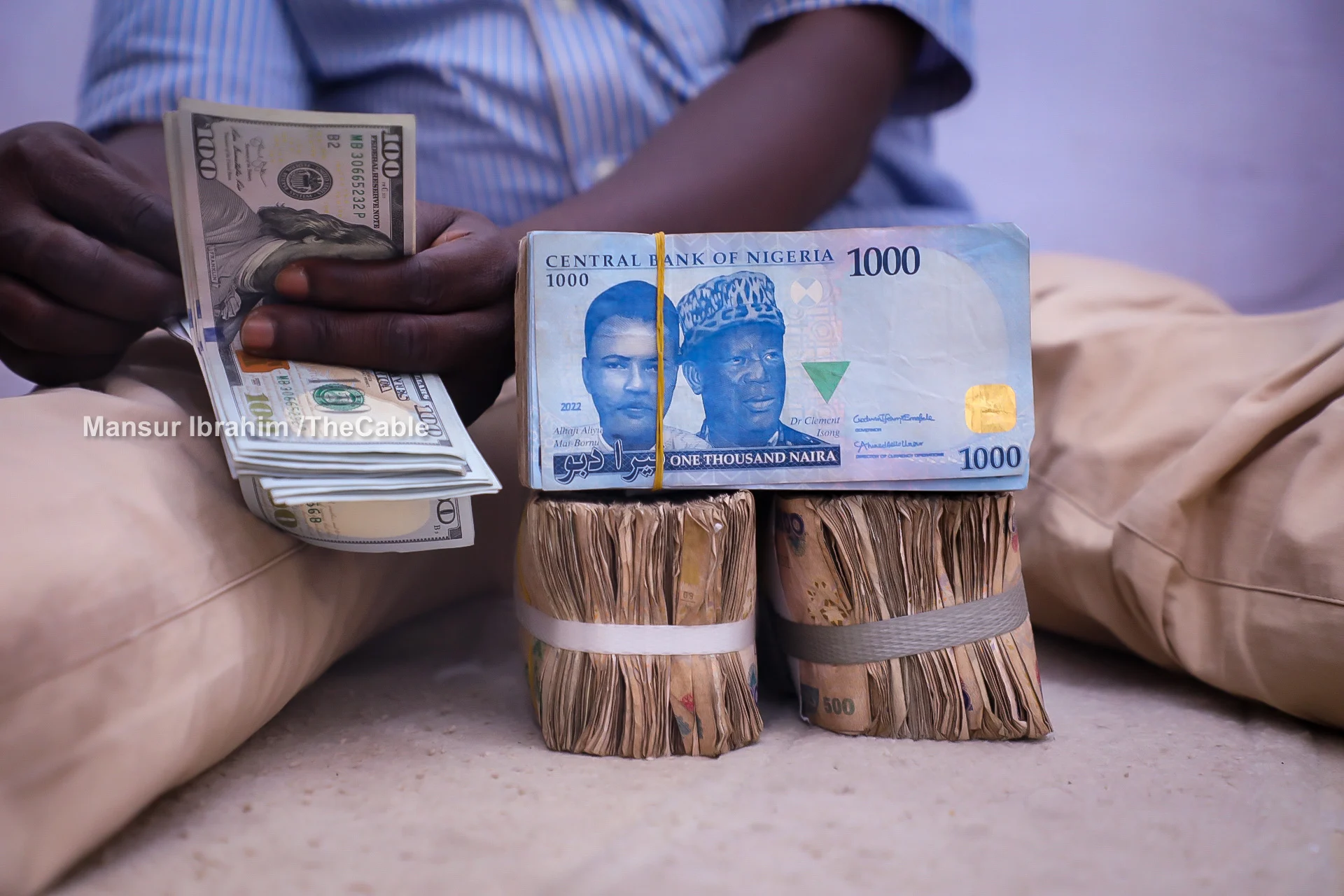
The Nigerian naira experienced a slight dip in the official foreign exchange market on Tuesday, reflecting persistent high demand for the U.S. dollar amidst global financial market uncertainties.
According to data from the Central Bank of Nigeria (CBN), the naira depreciated to N1,538/$, a marginal decline from Monday’s N1,536/$.
In the parallel market, the naira held steady at N1,660/$, showcasing relative stability compared to the minor fluctuations seen in the official market.
Analysts attribute this to the gradual adjustments in Nigeria’s unofficial currency markets following significant reforms introduced in 2024.
The naira faced its steepest decline in February 2024, plunging to N1,910/$ in the black market, driven by market reactions to federal government policies aimed at liberalizing the foreign exchange regime.
These reforms included floating the naira, leading to an over 30% depreciation of the local currency.
However, the introduction of the Electronic Foreign Exchange Matching System (EFEMS) in mid-2024 marked a turning point.
The system, designed to curb speculation and enhance market transparency, spurred a recovery of over N120/$ within a month. Experts believe EFEMS has played a crucial role in stabilizing the currency, despite ongoing global pressures.
READ ALSO: Naira ends 2024 at N1,535/$1 amid policy shift, exchange rate challenges
Financial analyst Dr. Akin Ojo noted, “The EFEMS initiative has significantly improved forex supply and demand transparency, reducing speculative pressures that previously plagued the market. However, achieving long-term stability requires consistent policy implementation and addressing Nigeria’s trade deficits.”
Meanwhile, the U.S. dollar maintained its bullish momentum in global markets, supported by robust Treasury yields and strong economic data. Reports from the Job Openings and Labor Turnover Survey (JOLTS) revealed 8.09 million job openings in November, surpassing October’s 7.83 million and market expectations of 7.7 million.
This points to a resilient labor market, bolstering the greenback’s safe-haven appeal.
“Geopolitical tensions and lingering trade war concerns are keeping the dollar strong,” said James Carter, an international markets strategist.
“With U.S. Treasury yields at high levels and the Federal Reserve signaling caution on rate cuts, we expect continued demand for U.S. assets.”
The dollar index demonstrated resilience, defending its 20-day Simple Moving Average (SMA). Despite overbought signals hinting at potential short-term pullbacks, analysts predict the dollar’s strength will persist, barring significant risk reversals.
Investors are now eyeing the upcoming U.S. non-farm payrolls report for December, expected to show a gain of 160,000 jobs after a 227,000 increase in November.
Market participants are also recalibrating expectations for rate cuts, with the Federal Reserve projected to reduce borrowing costs by 37 basis points by the end of 2025. However, a full rate cut isn’t anticipated until mid-year.
In contrast, the European Central Bank (ECB) faces greater easing expectations, with market pricing in a 99-basis-point reduction this year. These divergent monetary policy paths are likely to maintain pressure on emerging market currencies like the naira.


-

 Latest5 days ago
Full List: Meet the 2026 Nobel Prize winners across six categories
-

 Football5 days ago
Premier League Matchweek 7: Five Fixtures That Could Shape the Weekend
-

 Latest4 days ago
Umahi defends Lagos-Calabar highway route changes amid public outcry
-

 Business3 days ago
Dangote Refinery IPO: 70% Subscription claim meets fourfold demand assertion as investors seek clarity
-
Business4 days ago
Dangote Refinery IPO Extension: Was the 70% subscription report overhyped?
-

 Latest2 days ago
UCTH faces morgue crisis as 50 unclaimed corpses await mass burial
-

 Featured4 days ago
El-Rufai, ADC governorship candidate’s court appearance puts Kaduna opposition politics in focus
-

 Business2 days ago
BREAKING: Nigeria’s Inflation Rate Drops to 14.63% in September