
Business
NGX market cap plummets to $27.8bn following naira’s depreciation

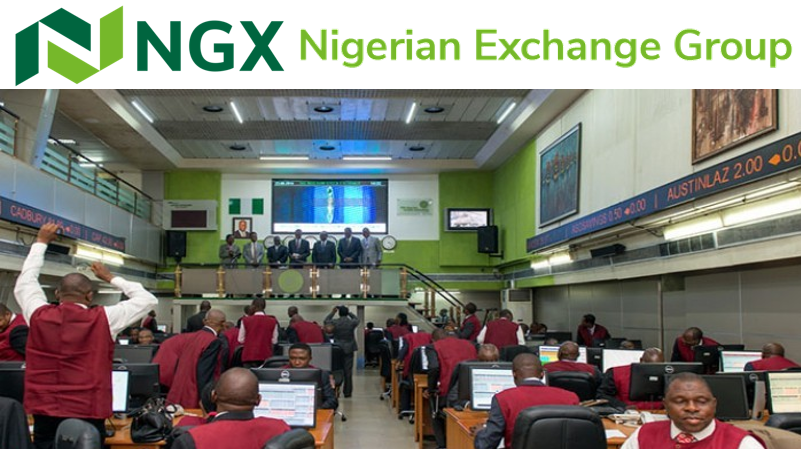
One year after Nigeria’s Central Bank floated the Naira to unify exchange rates, the market capitalization of the Nigerian Exchange (NGX) has dropped by $27.8 billion.
It would be recalled that President Bola Tinubu initiated the unification shortly after taking office, causing the Naira to depreciate from N465/$ to N756/$ on June 9, 2023.
On June 9, 2023, NGX’s market cap stood at N30.45 trillion, equivalent to $65.5 billion. By the first half of 2024, it was N56.6 trillion, but due to the weaker Naira, this was only $37.7 billion.
This $27.8 billion decline pushed NGX out of Africa’s top five largest stock markets.
Initially, the NGX surged, gaining 3.99 per cent on June 13, 2023, with the market cap rising to N31.670 trillion. However, in dollar terms, market capitalization fell by 36 per cent, from $65.49 billion to $41.89 billion, as the Naira’s value dropped.
READ ALSO: Global stock market rout hits NGX, MTN Nigeria sees significant decline
Despite a 22.64 per cent gain in the second half of 2023, the Naira depreciated further, ending the year at N912/$, bringing NGX’s market cap to $44.9 billion.
The Naira’s continued decline in 2024 further widened the disparity, despite a 33.81 per cent rise in the All-Share Index, exacerbating the overall loss to $27.8 billion.
Before unification, the Naira’s parallel market rate was over 60 per cent higher than the official rate, causing foreign investor participation in the NGX to plummet.
Although unification initially increased foreign participation to 11.25 per cent in June 2023, instability led to a decline the following month. By June 2024, foreign participation rose to 34.97 per cent, as the gap between market rates narrowed.
The NGX’s challenges are mirrored in Egypt, where the Egyptian Exchange (EGX) lost $26.6 billion in market cap after a 38 percent depreciation of the Egyptian Pound following a similar move to float its exchange rate in March 2024.
READ ALSO: NGX: Equities market dips further as investors lose N62bn
Prior to the unification move by the CBN, the disparity between the parallel and official market rates was over 60 per cent as Naira was selling as high as N760/$ in the parallel market.
The disparity coupled with a scarcity of forex in the Nigerian economy placed a red flag on the NGX as foreign participation in that market dropped to as low 4.4 per cent in April 2023.
The move to unify the rates initially excited foreign participants, causing foreign participation to increase to 11.25 per cent in June.
However, as the market failed to achieve unity, investors were spooked, thus leading to a drop in foreign participation in July 2023.
In 2024, there was an overall increase in foreign participation, reaching 34.97 per cent in June 2024, as the disparity between the parallel and official market rates dropped to about 1 percent.


-

 Latest5 days ago
Full List: Meet the 2026 Nobel Prize winners across six categories
-

 Football5 days ago
Premier League Matchweek 7: Five Fixtures That Could Shape the Weekend
-

 Latest4 days ago
Umahi defends Lagos-Calabar highway route changes amid public outcry
-

 Business3 days ago
Dangote Refinery IPO: 70% Subscription claim meets fourfold demand assertion as investors seek clarity
-
Business4 days ago
Dangote Refinery IPO Extension: Was the 70% subscription report overhyped?
-

 Latest2 days ago
UCTH faces morgue crisis as 50 unclaimed corpses await mass burial
-

 Featured4 days ago
El-Rufai, ADC governorship candidate’s court appearance puts Kaduna opposition politics in focus
-

 Business2 days ago
BREAKING: Nigeria’s Inflation Rate Drops to 14.63% in September