
Latest
2027: Obi, Kwankwaso offer different paths on fuel subsidy

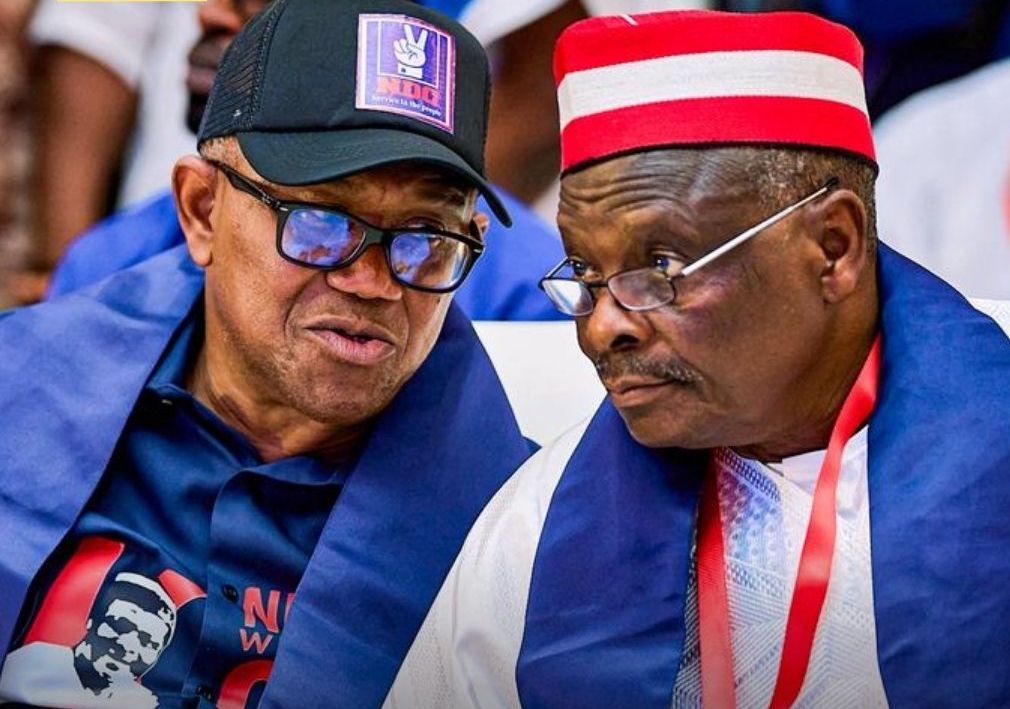
The fuel subsidy debate has exposed a policy difference within the Nigeria Democratic Congress (NDC) ticket, after its vice-presidential candidate, Rabiu Kwankwaso, said a government led by Peter Obi would reintroduce subsidy in a different form.
Kwankwaso made the disclosure on Tuesday during an interview with Arise TV while discussing petrol pricing and the economic policies of President Bola Tinubu’s administration.
Asked whether the NDC would support a return of subsidy, Kwankwaso said: “We are bringing subsidy in our own way.”
The former Kano State governor explained that the proposed approach would involve increased government investment in domestic refining, including the possible construction of refineries, to increase petrol supply and reduce prices.
“If individuals in this country could build refineries, I see no reason why the government, under certain circumstances, will not build a refinery or refineries,” he said.
He added that the objective would be to ensure Nigerians could purchase petrol at what he described as a “reasonable price.”
Kwankwaso also criticised Tinubu’s decision to remove petrol subsidy immediately after assuming office on May 29, 2023.
Although he acknowledged that the major contenders in the 2023 presidential election had campaigned on eventually removing subsidy, he argued that the implementation was too abrupt and failed to address its potential economic consequences.
He described the outcome as a “total mess, economically.”
Obi maintains support for subsidy removal
Kwankwaso’s position, however, contrasts with the publicly stated position of his running mate, Peter Obi.
READ ALSO; Babachir Lawal defects to NDC, backs Obi-Kwankwaso ticket
Speaking at the Nigerian Bar Association conference in Port Harcourt in August, Obi reaffirmed his support for subsidy removal, arguing that mismanagement of the proceeds should not justify reversing the policy.
“I subscribe and maintain that you need to remove subsidy. Mismanagement of the proceeds shouldn’t be the reason for not removing it,” Obi said.
Obi argued that the savings generated from subsidy removal should have been transparently invested in areas such as healthcare and other productive sectors, while measures should have been introduced to cushion the impact of higher fuel prices.
The contrasting statements have raised questions about how the NDC would reconcile its presidential and vice-presidential candidates’ positions on one of the country’s most consequential economic policies.
Economist Samson Simon of ARKK Economics & Data Limited said the candidates needed to agree on a common policy framework before the election.
He expressed concern that differences in economic policy could create challenges within an eventual administration and urged both politicians to harmonise their positions.
Political analyst Nduka Odo of Peaceland University, Enugu, similarly said the NDC needed to provide Nigerians with a clear explanation of how its proposed fuel-pricing policy would work.
The development comes as petrol pricing remains a major economic and political issue ahead of the 2027 elections, with opposition figures proposing different mechanisms for reducing the burden of fuel costs on households and businesses.


-

 Energy1 week ago
Fuel Battle: Dangote, marketers and government clash over petrol imports
-

 Latest3 days ago
Full List: Meet the 2026 Nobel Prize winners across six categories
-
 Featured7 days ago
103 Million Voters: What does INEC’s new register say about Nigeria’s population?
-

 Football3 days ago
Premier League Matchweek 7: Five Fixtures That Could Shape the Weekend
-

 Business1 week ago
The Ministry of Commerce of Loveworld gets a $1 million boost for new investment fund at LTIF 2026 to promote Trade in Ghana
-

 Features1 week ago
Edo’s 2.5 million vote promise: Can the numbers match the politics?
-

 Latest2 days ago
Umahi defends Lagos-Calabar highway route changes amid public outcry
-
 Latest1 week ago
Nigeria to Ghana: Inside police hunt for Anambra kidnap suspect