
Business
FG says it is committed to conservative borrowing

By ODUNEWU SEGUN
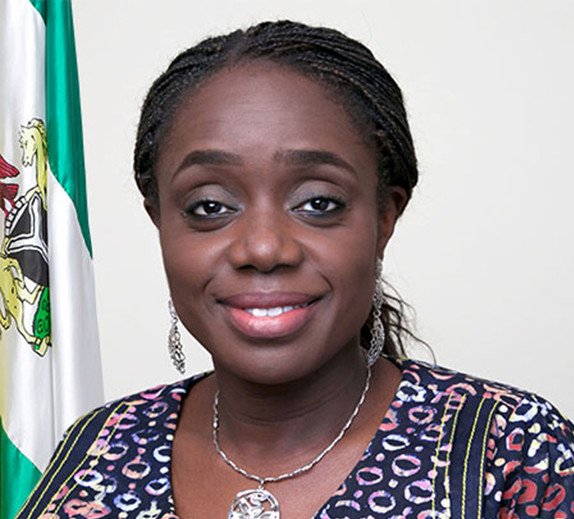
THE Minister of Finance, Kemi Adeosun has said that although borrowing is not the Federal Government’s primary focus, but it is important because the country needs capital investment to grow its economy.
She disclosed this in her recent article on the country’s economy posted on the ministry’s website. According to her, the debate about whether Nigeria should borrow is well-intentioned and cannot be dismissed without a careful analysis.
“I am in agreement with those who argue that Nigeria should not borrow simply because its debt to GDP level is low enough to accommodate such borrowing. There must be a clear business case backed by justifiable benefits. I believe that Nigeria has such a case at the present time. Simply put, we need capital investment to grow our economy.”
She said Nigeria’s low debt to GDP ratio is not exactly a positive attainment because it is accompanied by critically low level of infrastructure investment, and therefore a false economy. According to her, low capital formation is a risk which, if uncorrected, hinders future economic growth and this is already evident.
“The issue of borrowing, as we propose, will increase debt to GDP to 16 per cent and still leave us significantly lower than our peer group including Ghana at 70 per cent, South Africa at 50 per cent (2015) and Angola at 31 per cent (2014).”
ALSO SEE: Controversy over renewed fuel subsidy: Recurring aberration
She said appropriate levels of fiscal deficit have been used to grow many of the most successful global economies, adding that Nigeria could not be an exception, ”As ours develops, our sources of revenue will grow, diversify, and become less susceptible to external shocks. It’s important to note that capital spending creates an asset, and this gives a return over time in the form of growth. Infrastructural projects such as rail and roads create jobs, generate taxes and stimulate further spending.”
She explained that FG’s borrowing policy would remain conservative, and will see Nigeria accessing the lowest available funds. She said this was FG decided to approach multilateral agencies in the first instance, for budget support at concessional rates as low as 1.5 per cent per annum.
“We have secured commitments from export credit agencies that are tied to specific capital projects including key initiatives in power, transport and other infrastructure, and at semi-concessional rates. The balance will be sourced commercially to create a blended cost of capital that’s as low as possible.”
The minister said the Federal Government is also addressing the relatively high debt service to revenue ratio which saw 28.1 per cent of the country’s 2015 revenues devoted to debt. This, she said would be done through a systematic restructuring of inherited debt portfolio into a profile that is aligned with government’s medium term outlook as well as an increase in our revenues.



-

 Sports4 days ago
Senegal opens Dakar 2026 Youth Olympic Games, Africa’s first Olympic event
-
 Latest7 days ago
Tinubu endorses Nigeria’s participation in 2026 World Travel Market London
-
 Football6 days ago
U-17 Women’s World Cup: Flamingos Beat Mexico to Reach Quarter-Finals
-
 Business4 days ago
NNPC’s N66-per-litre petrol discount set to end October 31
-
 Latest4 days ago
INEC recognises Pantami for Gombe, keeps Kano NDC candidate off final list
-
 Latest4 days ago
FG Announces N50,000 cash support for vulnerable Nigerians under new relief programme
-

 Latest5 days ago
Netanyahu, Eisenkot face coalition deadlock as Israel struggles to form new government
-
 Latest4 days ago
NDC Chieftain tells Atiku to drop presidential ambition over son’s support for Tinubu