
Business
Experts warn 4% free-on-board (FOB) levy could exacerbate inflation in Nigeria
Why would the government inflict more hardship on the population? This new policy will certainly lead to more price increases, further driving up inflation.

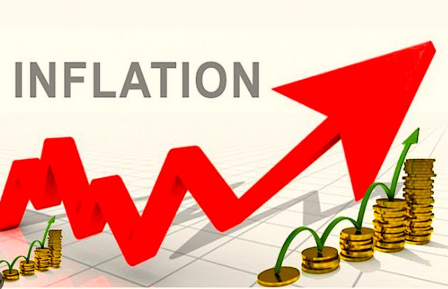
Financial experts have raised concerns that the recent implementation of a 4% Free-On-Board (FOB) levy on imports could worsen inflation in Nigeria.
On February 5, the Nigeria Customs Service (NCS) announced the introduction of the FOB levy, which, according to Abdullahi Maiwada, the service’s spokesman, is in line with the provisions of the Nigeria Customs Service Act (NCSA) 2023.
“In line with Section 18 (1) of the NCSA 2023, the NCS is implementing a 4% charge on the Free On-Board (FOB) value of imports,” Maiwada said. “The FOB charge, which is calculated based on the value of imported goods, including the cost of goods and transportation expenses incurred up to the port of loading, is essential to driving the effective operation of the service.”
However, financial experts have criticized the move, arguing that the levy could increase inflationary pressures in the country.
Dr. Wale Adegbite, former Chairman of the Manufacturers Association of Nigeria (MAN) in Ogun State, and Professor Evans Osabuohien, an economist at Covenant University, warned that the policy would have a negative impact on the economy.
In an interview with the press on Monday in Ota, Ogun, both experts expressed worry that the policy would result in higher prices and greater hardship for Nigerians.
Adegbite referred to the levy as a “disaster” that would worsen the already challenging economic situation.
He argued, “Why would the government inflict more hardship on the population? This new policy will certainly lead to more price increases, further driving up inflation. The masses will suffer more, as there will be a price increase without any corresponding rise in income.”
ALSO READ : CWC raises concerns over MSC’s efforts to undermine Nigeria’s legal system
Professor Osabuohien also acknowledged that while the new levy was intended to generate additional revenue for the federal government, it would have adverse effects on the economy.
He pointed out that the levy would increase the cost of living for households and further strain small and medium enterprises (SMEs) that rely on imported raw materials.
“This additional cost from the 4% increase in FOB will be transferred to consumers, leading to a rise in the cost of goods and services. This will automatically trigger an increase in the nation’s inflation rate,” Osabuohien said.
The experts are calling for a reevaluation of the policy to prevent further economic hardship for Nigerians, especially in light of the country’s ongoing inflationary challenges.














-

 Sports3 days ago
Senegal opens Dakar 2026 Youth Olympic Games, Africa’s first Olympic event
-
 Latest5 days ago
Tinubu endorses Nigeria’s participation in 2026 World Travel Market London
-

 Football4 days ago
U-17 Women’s World Cup: Flamingos Beat Mexico to Reach Quarter-Finals
-

 News1 week ago
Rugby: Borthwick Faces Key Selection Questions as World Cup Looms
-

 Latest3 days ago
Netanyahu, Eisenkot face coalition deadlock as Israel struggles to form new government
-
 Featured4 days ago
How court ruling reshapes APC’s Imo West Senatorial contest
-

 Crime1 week ago
Passengers feared abducted on Kebbi-Abuja journey as viral video shows armed men threatening captives (VIDEO)
-
 Business2 days ago
NNPC’s N66-per-litre petrol discount set to end October 31