
Business
UBA’s outlook remain stable – Fitch

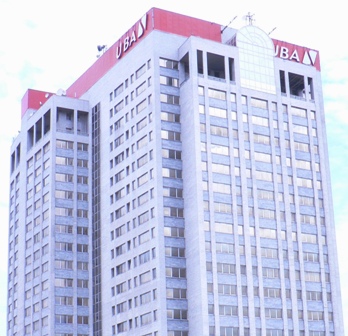
International credit rating agency, Fitch, has upgraded Nigeria’s United Bank for Africa Plc Viability Rating status to ‘b’ from ‘b-‘while also affirming the bank’s outlook stability.
The bank’s Long-term Issuer Default Rating (IDR) of ‘B+’, Support Rating (SR) of ‘4’ and Support Rating Floor (SRF) of ‘B+’ were also affirmed by Fitch.
Fitch explained that the upgrade reflected the bank’s sustained reduction in leverage in conjunction with capital ratios being in line with peers. “We expect capital ratios to remain adequate, on the back of manageable growth in lending.
Leverage is adequate and should be seen in the context of solid liquidity compared to peers.
The upgrade also reflects UBA’s solid company profile, including a broader international footprint than peers, although 2016 will still be challenging.
“In assessing the probability of sovereign support, Fitch considers the authorities’ willingness to support the Nigerian banks to be high as demonstrated in the past, but its ability to do so is constrained by Nigeria’s sovereign rating (BB-/Negative Outlook). UBA’s SRF of ‘B+’ reflects its systemic importance in Nigeria.
“The stable outlook reflects that the pressures resulting from Nigeria’s challenging and volatile operating environment are – to an extent – already factored into UBA’s ratings. VR the bank’s VR is constrained by Nigeria’s highly challenging and volatile operating environment,” it explained.
Furthermore, Fitch pointed out that the recent oil price shock and subsequent currency pressure had weakened operating environment in the country and was likely to continue to affect its Gross Domestic Product growth in 2016. This, it argued, may put pressure on UBA’s profitability and asset quality. “Asset quality is in line with peers.
UBA’s impaired loans ratio of 1.9 per cent at end of first half 2015 was below the sector average, but during the last Nigerian banking crisis the loan book did not perform as well as those of the highest-rated Nigerian banks.
“Similar to peers, UBA has substantial loan exposures to oil and gas. Some facilities are likely to be restructured if oil prices remain low. Profitability is resilient. The net interest margin (NIM) is below peers’ largely due to excess liquidity in the African subsidiaries. We expected this to gradually improve as UBA intends to expand lending in these markets,” Fitch added.










-

 Football4 days ago
Banda, Chawinga make 2026 Women’s Ballon d’Or top 30 shortlist
-

 Latest1 week ago
Cole-Alegbe unveils memoir, urges leaders to harness technology for lasting impact
-

 Business5 days ago
Nigeria records N12.59trn trade surplus in Q2 2026 — NBS
-

 Featured4 days ago
Peter Obi, Makinde and the 2027 elections: Can unity really challenge APC?
-

 Business5 days ago
Nigerian Breweries’ H1 profitability strengthens as revenue hits N804bn
-

 Business1 week ago
Jetour G700 PHEV Storms Abuja as Jetour Nigeria Takes Luxury Mobility Showcase to FCT
-

 Latest5 days ago
Tinubu’s US legal battle: Group questions silence of elder statesmen
-

 Energy3 days ago
Brent crude tops $100: What higher oil prices mean for Nigeria