
Energy
PIB: Centre tasks President Buhari on a quick ascent

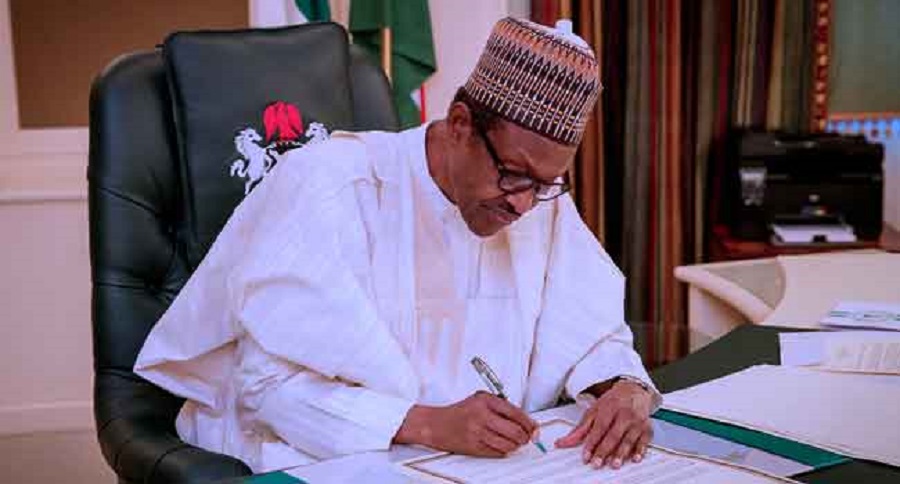
The Centre for Transparency Advocacy (CTA) has urged President Muhammadu Buhari to swiftly sign the Petroleum Industry Bill (PIB) as soon as he received the document.
The bill was passed by the National Assembly on Thursday.
The Executive Director of the group, Ms. Faith Nwadishi made the call in a statement in Abuja.
The National Daily reports that both chambers of the national assembly on Thursday passed the PIB after more than 20 years.
Nwadishi said the Bill if assented to by the President would be in fulfilment of his electoral promise to Nigerians and commitment to a better-managed petroleum sector.
“Generally, we are happy that sections 83, 104 to 108 of the new Bill (the House of Representatives version) makes provisions for contract transparency, disclosure, and outlaws gas flaring.
“The CTA therefore, calls on citizens and the civil society not to rest on their oars until this 20 -year journey struggle is concluded.”
The administration of President Umaru Yar’Adua presented the PIB to the Sixth National Assembly in September 2008.
But the bill stalled over disagreements on the sharing of oil profit among the international oil companies, host communities, and the federation, according to the Nigeria Extractive Industries Transparency Initiative.
In July 2012, the administration of President Goodluck Jonathan forwarded a revised version of the PIB to the Seventh Assembly, but it suffered the same fate that befell it in the previous legislative cycle.
It was passed by only the House of Representatives at the tail end of their term.
In the first term of President Buhari, the Eighth NASS split the bill into four parts – the Petroleum Industry Governance Bill (PIGB), Petroleum Industry Administration Bill, Petroleum Industry Fiscal Bill, and Petroleum Host Community Bill — in a bid to fast-track its passage into law.
The PIGB was passed by the Senate and the House of Representatives in May 2017 and January 2018 respectively.
After its passage by the NASS, the PIGB was transmitted to Buhari for assent in July 2018, but he eventually declined to sign the bill into law.
According to the Presidency, the provision of the PIGB permitting the Petroleum Regulatory Commission to retain as much as 10 percent of the revenue generated is one of the reasons Buhari declined to assent to the bill.
The bill is intended as a complete overhaul of the Nigerian oil and gas sector seeks to, among others, ensure an increased level of transparency and accountability by strengthening governing institutions to attract investments in the industry.
The National Daily reports that Buhari transmitted the bill 2020 to the National Assembly and proposed the creation of the Nigerian National Petroleum Company Limited.
The proposed law also recommends the creation of the Nigerian Midstream and Downstream Petroleum Regulatory Authority known as ‘The Authority’, among others


-

 Latest1 day ago
Pastor Chris Oyakhilome announces mother’s passing at 88 [VIDEO]
-

 Football5 days ago
Saka: England still carry World Cup scar
-

 Comments and Issues6 days ago
Sometimes, goodwill finds us through the people we love
-
 Business6 days ago
CBN reduces MPR by 350bps to 23% in major monetary policy shift
-

 Latest3 days ago
Arsenal eye €70-80m move for Real Madrid star
-

 Business1 week ago
Jetour takes T1 adventure SUV experience to Abuja, targets growing Nigerian market
-

 Football1 week ago
Nigeria vs Colombia: Falconets battle for U-20 World Cup semi-final ticket
-

 Crime2 days ago
Police arrest suspect, launch manhunt for 2 others over Delta Education Director’s death