
Business
Amid revenue struggles, Nigeria’s foreign debt servicing soars by 108%

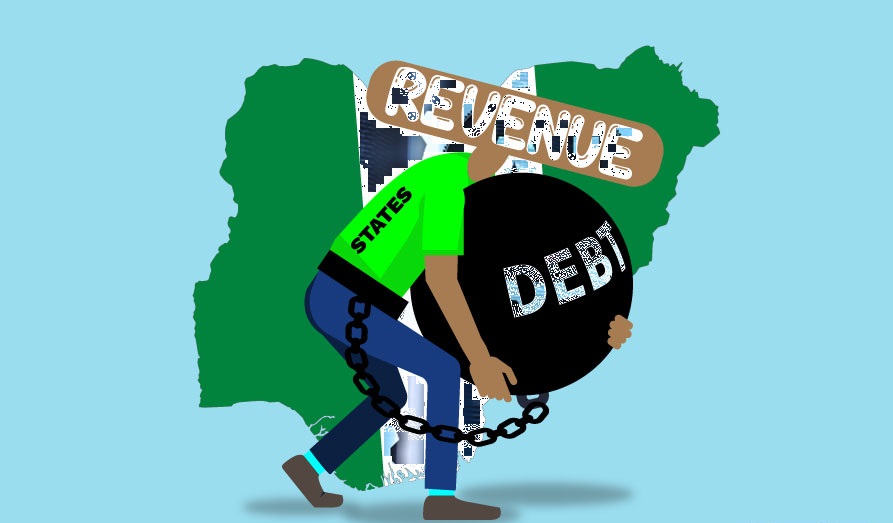
The cost of servicing Nigeria’s foreign debt surged by 107.7% between January and August 2024, reaching N3.8 trillion—far surpassing the initial N1.83 trillion projected in the 2024 budget.
This sharp increase of N1.97 trillion underscores the mounting financial strain facing the nation, as revealed in the 2025-2027 Medium Term Expenditure Framework and Fiscal Strategy (MTEF & FSP) published by the Budget Office.
Despite allocating N3.53 trillion for domestic debt servicing, actual expenditures only exceeded this by a modest 2%, totaling N3.6 trillion.
This contrasts sharply with the escalating costs of foreign debt servicing, which are significantly influenced by the depreciation of the naira and a rise in borrowing at higher interest rates. Economists warn that such disparities could exacerbate Nigeria’s fiscal vulnerability.
READ ALSO: Experts warn of mounting fiscal risks as Nigeria’s debt nears $45.1bn mark for 2024
Escalating Costs and Fiscal Strains Economic analyst Dr. Bayo Ademola noted, “The rapid increase in foreign debt servicing is a concerning trend. It not only reflects higher borrowing costs but also the impact of the weakened naira on obligations paid in foreign currencies. This situation is unsustainable without robust fiscal reforms.”
By August 2024, the Federal Government’s retained revenue stood at N12.74 trillion, achieving 73.8% of its N17.25 trillion target.
Analysts attribute this shortfall mainly to delays in the implementation of a proposed windfall tax. Yet, non-oil revenues showed remarkable performance, totaling N3.81 trillion, surpassing the set target by 160.1% and cushioning the underperformance of oil revenues, which yielded only N4.09 billion—a mere 75% of budget expectations.
Corporate Income Tax (CIT) and Value Added Tax (VAT) were significant contributors, generating N1.71 trillion and N530.41 billion, respectively. Customs revenues also showed resilience, reaching N969.89 billion, or 95% of the target, driven by improved trade and collection efficiency.
Oil Sector Underperformance The report underscored the oil sector’s underperformance, with gross oil and gas revenue projections set at N20 trillion for 2024.
However, only N9.83 trillion was realized from the prorated N13.33 trillion target as of August, translating to a 72.1% performance rate. This shortfall further narrowed net oil and gas revenue to the Federation Account to N8.5 trillion—25.3% below expectations—due to deductions such as the statutory 13% derivation for oil-producing states.
Economist and oil industry expert, Dr. Funmi Okon, highlighted that “fluctuating global oil prices and production constraints have amplified revenue challenges, making Nigeria more reliant on volatile foreign markets.”
Outlook and Implications With the debt-to-GDP ratio crossing 50% by March 2024, experts like financial strategist Mr. Akin Yusuf stress that “Nigeria’s fiscal sustainability depends on diversifying revenue sources and managing debt levels prudently.”
The depreciation of the naira has not only raised the cost of servicing foreign debt but has also squeezed public finances, pointing to a need for structural economic reforms to ease fiscal pressure.


-

 Latest3 days ago
Full List: Meet the 2026 Nobel Prize winners across six categories
-
 Featured7 days ago
103 Million Voters: What does INEC’s new register say about Nigeria’s population?
-

 Football3 days ago
Premier League Matchweek 7: Five Fixtures That Could Shape the Weekend
-

 Business1 week ago
The Ministry of Commerce of Loveworld gets a $1 million boost for new investment fund at LTIF 2026 to promote Trade in Ghana
-

 Features1 week ago
Edo’s 2.5 million vote promise: Can the numbers match the politics?
-

 Latest2 days ago
Umahi defends Lagos-Calabar highway route changes amid public outcry
-

 Latest1 week ago
Nigeria to Ghana: Inside police hunt for Anambra kidnap suspect
-

 Business2 days ago
Dangote Refinery IPO Extension: Was the 70% subscription report overhyped?