
Latest
Buhari calls for increase in productivity, value addition across sectors

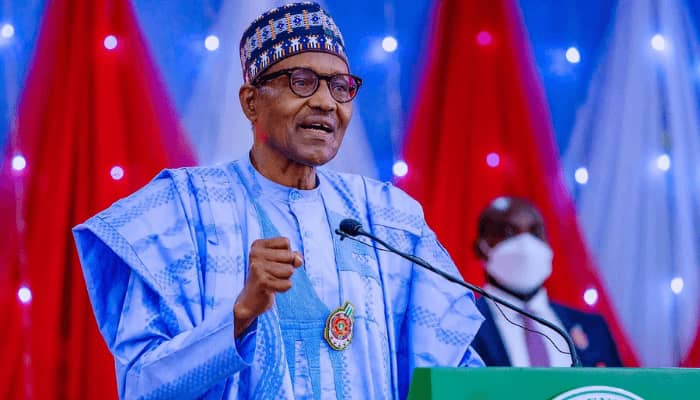
President Muhammadu Buhari, in his remarks at the opening ceremony of National Economic Summit on Monday in Abuja, emphasized the need for increased productivity and value addition across different sectors of the economy to create more jobs for Nigerians, especially, the youth.
President Buhari, represented by Vice President Yemi Osinbajo SAN, said that there is the need for more intentional and focused investment on the youth, especially in globally marketable skills.
“The task ahead requires partnership, innovative thinking but, most importantly, disciplined implementation,“ he said.
Emphasising on improving macroeconomic conditions, Buhari said that the economy continued to grow, with Gross Domestic Product (GDP) at 3.54 per cent in the second quarter of 2022.
“Non-oil revenues have similarly continued to improve due to part of strategic revenue initiatives, including the annual Finance Act.
“It is still our revenue challenges that heighten the notion that we have a debt problem, which is really not the case, given that our debt-GDP ratio is just 23 per cent, ” he said.
The president said that though the country’s debt service to revenue ratio was high, the country, through the Debt Management Office, was better able to adopt strategies to manage the debt more efficiently.
He said that the government was adopting strategies such as using more concessional loans, spreading out debt maturities and re-financing short-term debt with longer-term debt instruments.
“This is why increasing revenues should engage most of the attention,” he said.
The Minister of State, Budget and National Planning, Clem Agba, said that the NESG has provided a veritable platform for dialogue on reforming the Nigerian economy.
“Since the inception of the summit, the nucleus of conversations between government and the private sector had been targeted at building a resilient, virile and competitive economy.
“The Economic Recovery and Growth Plan (ERGP) 2017-2020, developed in 2016, was to restore growth.
“It was designed to restore growth, invest in our people, and build a globally competitive economy.
“Principally, the conscientious implementation of the Plan helped in making Nigeria exit recession early,” Agba said.


-

 Latest2 days ago
Pastor Chris Oyakhilome announces mother’s passing at 88 [VIDEO]
-

 Football5 days ago
Saka: England still carry World Cup scar
-

 Comments and Issues1 week ago
Sometimes, goodwill finds us through the people we love
-

 Latest3 days ago
Arsenal eye €70-80m move for Real Madrid star
-
 Business6 days ago
CBN reduces MPR by 350bps to 23% in major monetary policy shift
-

 Latest2 days ago
How adulterated palm oil, coloured pepper are putting consumers at risk
-

 Crime3 days ago
Police arrest suspect, launch manhunt for 2 others over Delta Education Director’s death
-

 Crime2 days ago
Deaths in NSCDC Custody: Can Nigeria guarantee the safety of detainees?