
Business
CBN stops outbound IMTO transactions, limits inflow payouts to Naira

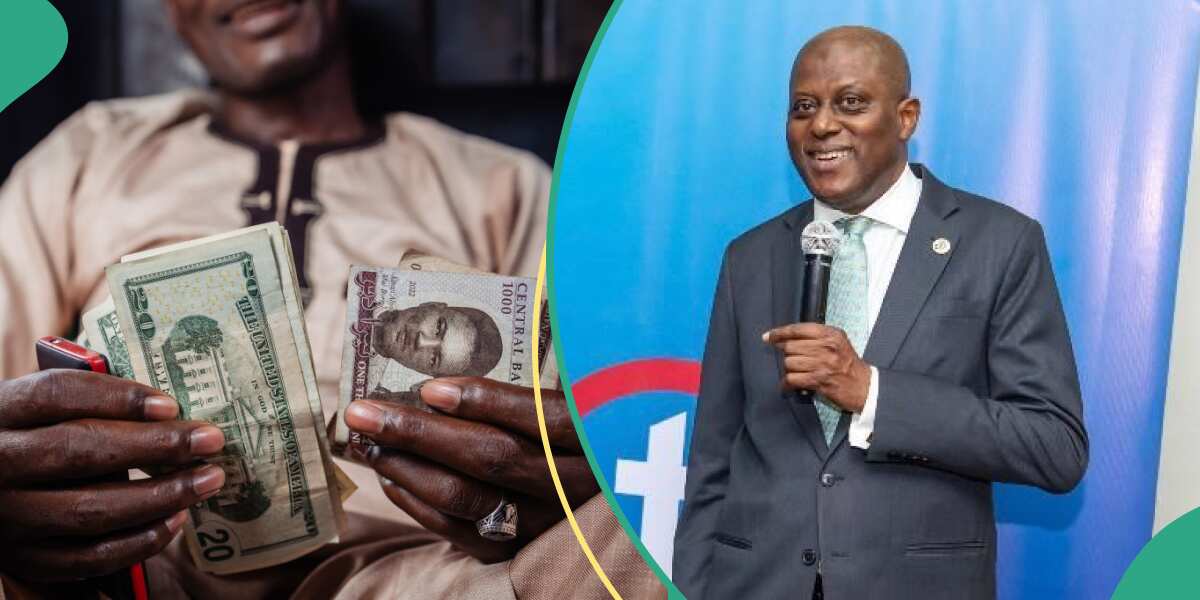
The Central Bank of Nigeria (CBN) has restricted the operations of international money transfer operators (IMTOs) to only inbound transfers, stopping outbound transfers.
This implies that IMTOs can no longer facilitate money transfers from Nigeria to other countries, according to the revised guidelines for the operations of IMTOs, which were officially released on January 31, 2024.
Stating the permissible activities of the operators, the new document read:
“The permissible activities of International Money Transfer Operators shall include inbound international money transfer transactions only. The transactions shall be limited to the following activities:
“The acceptance of monies for the purpose of transmitting them to persons resident in Nigeria.
“Cross-border personal money transfer services, such as money transfer services towards family maintenance; money transfer services in favour of foreign tourists visiting Nigeria, etc.
“The money transfer services shall target individual customers and the transactions shall be on “person to person”, “business to person” and “business to business” transfer basis which may be reviewed by the CBN from time to time.”
The CBN’s recent decision to restrict IMTOs to inbound transfers only marks a significant shift in the regulatory landscape for foreign exchange and remittance services in Nigeria.
READ ALSO: CBN denies planning to convert $30b domiciliary deposits to Naira
Also, IMTOs are barred from purchasing foreign exchange from the domestic market to fulfill their obligations.
This decision could be seen as an attempt by the CBN to manage foreign exchange reserves and stabilize the local currency by limiting the outflow of foreign currency.
It might also enhance the monitoring of international financial transactions and prevent illicit financial flows.
However, this could also lead to specific challenges for individuals and businesses accustomed to IMTOs for outbound transfers, compelling them to seek alternative channels.
It appears that the CBN might have placed a ban on dollar and other foreign currency payouts for international transactions, according to the latest guidelines.
This is unlike the previous guidelines, where there was no clear statement on the currency in which the inflow payments should be made.
READ ALSO: Naira exchanges for N1,461.90/$1 despite CBN’s removal of IMTOS FX cap
The new document reads: “All inbound money transfers to Nigeria shall be paid to beneficiaries in Naira through a bank account, or cash.
Proceeds of IMTO more than the equivalent of $200 shall be paid through an account. Cash payments shall be made upon the provision of a satisfactory/acceptable means of identification.
“Where the beneficiary does not have an account with the IMTO agent bank, the agent bank shall credit the beneficiary account in another bank.”
This comes about seven months after the central bank introduced the naira payout option for diaspora remittances.
Before that period, the CBN had released a circular in 2021, stressing that it is a breach of its regulations for diaspora remittance payments to be made in naira.
This comes barely a week after the naira crashed to a record low of N1,482.57/$ following strong demand on the official market, also known as NAFEM, exceeding the parallel market rates.








-
 Latest7 days ago
Israel marks 3 years since October 7 Hamas attack amid Gaza strikes, election debate
-

 Energy7 days ago
Fuel Battle: Dangote, marketers and government clash over petrol imports
-

 Energy1 week ago
Petrol, diesel prices rise 86% in 2026 as costs hit fresh highs
-
 Latest2 days ago
Full List: Meet the 2026 Nobel Prize winners across six categories
-

 Football1 week ago
Nigeria’s World Cup exit under spotlight as FIFA’s DR Congo files emerge
-

 Latest1 week ago
US Court set to rule on release of FBI, DEA records on Tinubu
-

 Business1 week ago
Nigerian investors at a crossroads as fixed-income yields slide
-

 Latest1 week ago
Oyo APC crisis deepens as Oluyole reconciliation meeting ends in brawl