
Latest
Clement Onyemelukwe: The Engineer who drew the blueprint for Nigeria’s national grid

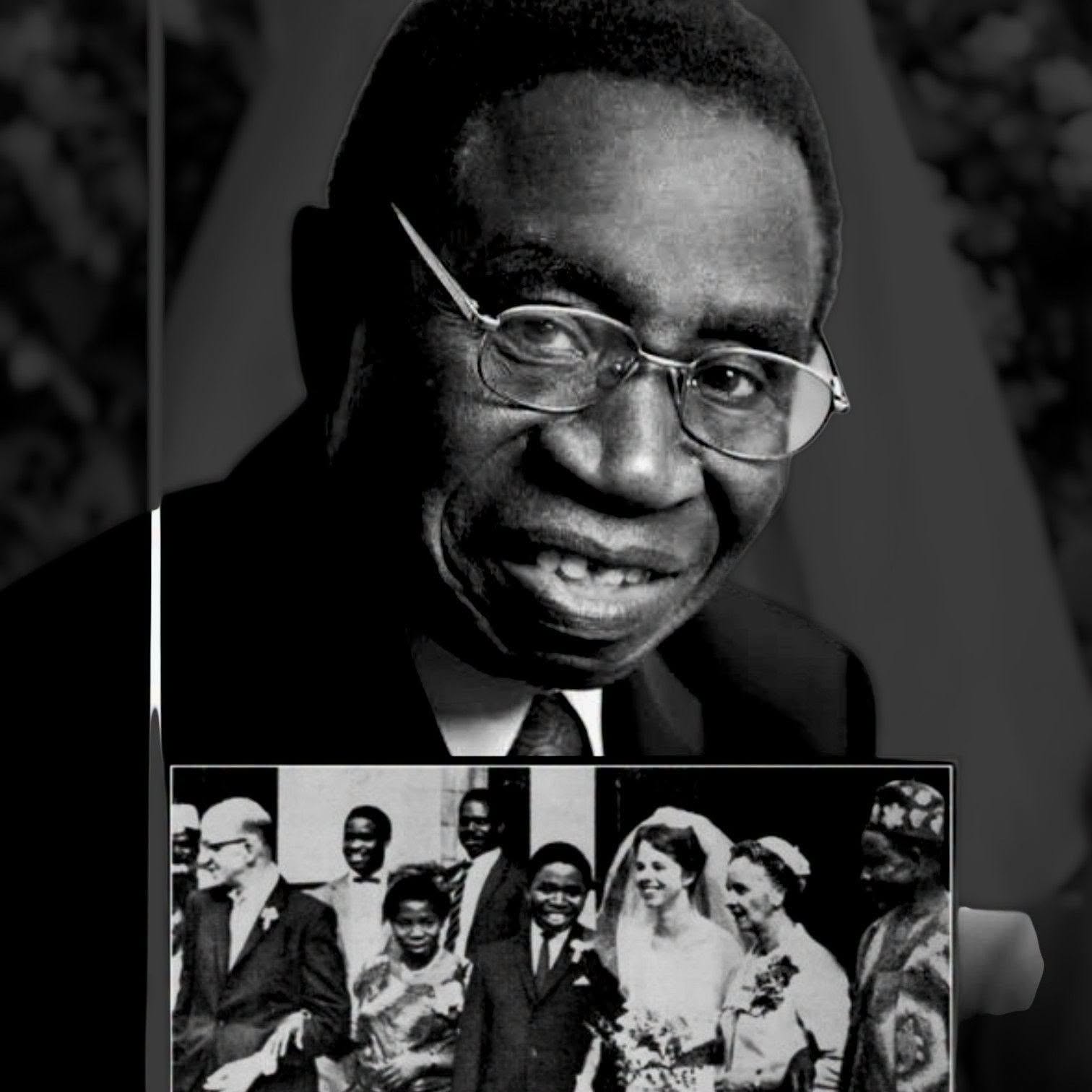
By Andra Oriyomi
In the early years of Nigeria’s independence, when the young nation was searching for professionals capable of translating its political freedom into tangible development, one engineer returned from Britain with a mission that would permanently shape the country’s future.
His name was Engr. Clement Chukwukadibia Onyemelukwe, a pioneering electrical engineer whose work laid the foundation for Nigeria’s national electricity transmission system.
Remembered by many as the “Father of Nigerian Electricity,” Onyemelukwe combined technical expertise with an extraordinary capacity for innovation. His career spanned the formative years of Nigeria’s power sector, the turbulence of the Civil War and decades of international engineering and consultancy.
But his story extends beyond power infrastructure. It also includes a cross-cultural marriage that attracted international attention at a time when racial tensions and restrictions on interracial relationships were still deeply entrenched in parts of the United States.
Building the Backbone of Nigeria’s Power System
Born on April 1, 1933, in Nanka, Anambra State, Onyemelukwe demonstrated an early aptitude for science and engineering.
His academic journey took him to University College, Ibadan, before he proceeded to Leeds University in the United Kingdom on a colonial government scholarship. He obtained a B.Sc. in Engineering in 1956 and subsequently gained experience in Britain’s electricity industry.
As Nigeria moved towards independence and began developing its own cadre of indigenous professionals, Onyemelukwe was among the engineers called upon to help build the country’s technical institutions.
In 1962, at only 29, he became Chief Electrical Engineer of the Electricity Corporation of Nigeria (ECN), taking on a senior role at a time when the country’s electricity infrastructure was still largely underdeveloped.
It was from this position that he played a major role in planning and initiating Nigeria’s 330-kilovolt transmission network, providing the foundation for what would evolve into the country’s national grid.
The project was more than an engineering undertaking. It represented an attempt to create an interconnected electricity system capable of supporting Nigeria’s industrialisation and economic expansion.
A Marriage That Made International Headlines
While Onyemelukwe’s professional accomplishments were making an impact at home, his personal life unexpectedly attracted global attention.
In December 1964, he married Catherine Zastrow, an American Peace Corps volunteer. Their interracial marriage became an international news story, receiving coverage from major publications including The New York Times, Life Magazine and Ebony Magazine.
The marriage came at a particularly sensitive period in American history, when racial segregation and discrimination remained widespread and interracial marriage was still prohibited in some states.
Zastrow’s home state of Kentucky was among those where interracial marriage remained illegal at the time. Following the couple’s marriage, her parents reportedly faced racist harassment and threatening telephone calls after returning to the United States, eventually forcing them to change their phone number.
Despite the hostility, the couple also received thousands of messages of support from people around the world.
Their marriage consequently became more than a private union. It was viewed as a symbol of changing social attitudes and the increasingly interconnected world of the 1960s.
Engineering Under the Pressures of War
The outbreak of the Nigerian Civil War in 1967 dramatically altered Onyemelukwe’s career trajectory.
His engineering skills were redirected towards the Biafran war effort, where he assumed leadership roles involving the region’s coal resources and electricity utilities.
Perhaps one of his most remarkable wartime assignments came through his role as executive chairman of the Biafra Airports Board.
With the region under blockade and facing severe shortages of essential supplies, maintaining functioning airstrips became critical to the movement of relief materials and other supplies.
Onyemelukwe reportedly developed local engineering solutions that enabled the airfields to remain operational, including arrangements that allowed aircraft to land safely at night despite the difficult wartime conditions.
The episode demonstrated a recurring feature of his career: the ability to improvise engineering solutions under severe constraints.
From Public Service to International Consultancy
When the Civil War ended in 1970, Onyemelukwe briefly returned to the ECN before moving into the private sector.
In 1973, he established Freeman Engineering in Lagos, beginning a new chapter in his career as an entrepreneur and engineering consultant.
Three years later, in 1976, he founded Colechurch International Ltd in the United Kingdom, a project development and consultancy firm that subsequently undertook work with an international outlook.
His professional interests increasingly extended beyond electricity into business development, economics and infrastructure consultancy.
In 1993, Onyemelukwe and his family relocated to Westport, Connecticut, in the United States. He later became an American citizen in 2007.
Retirement did little to diminish his intellectual curiosity. He remained involved in research, writing and the exploration of economic and business ideas, continuing to apply the analytical mindset that had defined his engineering career.
A Legacy Beyond the Grid
Clement Onyemelukwe died on January 18, 2020, at his home in Westport, Connecticut, at the age of 86, following complications from metastatic non-small cell lung cancer.
He was survived by his wife, Catherine, his children and a body of work that remains closely associated with the formative years of Nigeria’s electricity infrastructure.
Long after his death, the significance of his contribution lies not only in the transmission lines and engineering plans associated with his career, but also in the broader story they represent.
Onyemelukwe belonged to a generation of Nigerian professionals who returned home around independence and helped transform the promise of nationhood into institutions, infrastructure and technical capacity. Clement Onyemelukwe: The Engineer Who Drew the Blueprint for Nigeria’s National Grid


-
 Latest6 days ago
Israel marks 3 years since October 7 Hamas attack amid Gaza strikes, election debate
-

 Energy6 days ago
Fuel Battle: Dangote, marketers and government clash over petrol imports
-

 Energy1 week ago
Petrol, diesel prices rise 86% in 2026 as costs hit fresh highs
-

 Football7 days ago
Nigeria’s World Cup exit under spotlight as FIFA’s DR Congo files emerge
-

 Energy1 week ago
Has Iran lost control of the Strait of Hormuz? Oil flows rebound as war disruptions persist
-

 Latest7 days ago
US Court set to rule on release of FBI, DEA records on Tinubu
-
 Latest18 hours ago
Full List: Meet the 2026 Nobel Prize winners across six categories
-

 Business7 days ago
Nigerian investors at a crossroads as fixed-income yields slide