
News
Onaiyekan calls for sweeping electoral reforms, stronger media to defend democracy

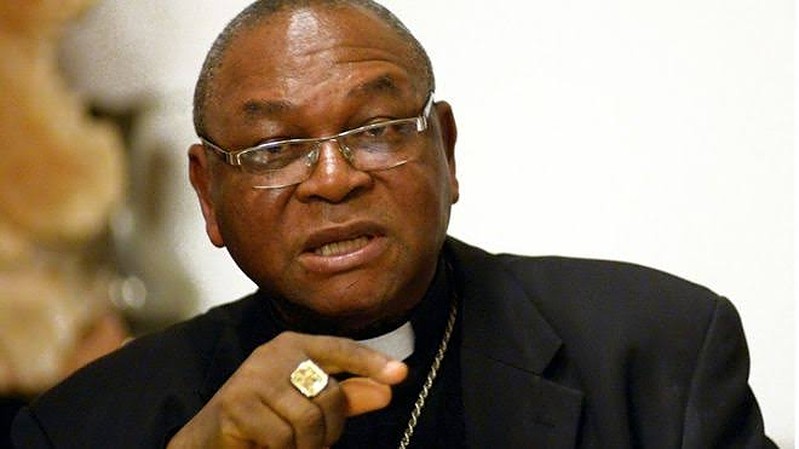
Cardinal John Onaiyekan, Archbishop Emeritus of Abuja, has called for sweeping reforms of Nigeria’s electoral system, including greater independence for the Independent National Electoral Commission (INEC), faster resolution of election disputes and the introduction of independent candidacy.
Onaiyekan made the call while delivering the keynote address at the 2026 All Nigeria Editors Conference (ANEC), organised by the Nigerian Guild of Editors, on the theme, “The Ballot, the Media and the Task of Keeping Democracy Alive.”
The cardinal, who described himself as a non-specialist speaking as an 82-year-old Nigerian and religious leader, said the country’s democracy must ultimately be judged by whether it serves the interests of citizens.
“Whatever we may say about this, we cannot get away from the fact that, like every other form of government, democracy must be governance for the good of the people,” he said.
He expressed concern about the quality of Nigeria’s elections since the return to democratic rule in 1999.
“In Nigeria, we have had several elections since 1999. It is difficult to believe that we have been making progress,” he said.
“In fact, it seems that the quality of the elections has been reducing from one election to the other, and this is not good news at all.”
Electoral System Under Pressure
Onaiyekan identified several challenges confronting Nigeria’s elections, including the “do-or-die” approach of politicians, the influence of zoning and state-of-origin considerations, the use of state resources for partisan purposes, questions surrounding INEC’s independence and the heavy deployment of security agencies on election days.
He said politicians too often treat elections as battles for power, wealth and influence, leaving ordinary voters marginalised.
“The people hardly count at all. Rather, they are just pawns on the political game,” he said.
The cardinal also questioned INEC’s ability to remain genuinely independent when the commission is established by government and those in government are themselves contestants in elections.
“The INEC is supposed to be independent by definition, Independent National Electoral Commission. But it is doubtful how independent it is or can be,” he said.
He further criticised the use of government resources for partisan political activity, particularly during elections.
“We often hear about the factor of incumbency during elections,” he said, arguing that governments at both federal and state levels have struggled to provide a level playing field for competing parties and candidates.
Rethink Election Security
Onaiyekan called for a less militarised approach to election security, saying the overwhelming presence of security personnel can intimidate voters.
“They are supposed to work with professionalism, no intimidation, no harassment of the people,” he said.
Drawing on his experience of elections in Italy, where he studied as a young man, he said Nigerians should reconsider the practice of turning election days into highly securitised national events.
“We have to review our own habit of turning election days into a nation at war,” he said.
Election Cases Should Not Determine Elections
The cardinal also criticised the growing role of litigation in determining electoral outcomes.
He said the judiciary should adjudicate disputes rather than become the arena where elections are effectively decided.
“The judiciary is not to determine elections about who wins, but rather to adjudicate disputes when they arise,” he said.
He called for the establishment of a special election tribunal dedicated exclusively to electoral disputes and urged that all cases be resolved before successful candidates are sworn into office.
A system in which an elected president or governor assumes office and then uses state resources to defend the election victory in court, he argued, raises questions of fairness.
He also proposed giving voters, rather than only candidates, legal standing to challenge election results.
“At present, only candidates have locus standi to challenge election results. But we who cast the votes and whose votes are at stake have no room to complain. This must change,” he said.
Seven-Point Reform Agenda
Onaiyekan proposed seven reforms for consideration by the next National Assembly.
He called for a new method of appointing the INEC chairman and commissioners to reduce their dependence on political office holders; the creation of a special election tribunal; legal standing for voters to challenge disputed results; the resolution of election cases before inauguration; provision for independent candidates; a 50 per cent threshold for presidential elections, with a runoff where necessary; and tighter rules governing lawmakers who defect from the parties under which they were elected.
On independent candidacy, he said Nigerians should have the opportunity to elect respected individuals who are not members of political parties, particularly at the local level.
“It is about time we curb the tyranny of the political parties and their ruthless godfathers,” he said.
On presidential elections, he argued that a candidate should secure at least 50 per cent of votes cast to win outright.
“A situation where a candidate is declared a winner and our president with only 30% of the votes cast, puts doubt on the authenticity of the victory,” he said.
He also proposed that lawmakers who cross to another political party during their tenure should return to their constituencies and seek a fresh mandate.
“It is not fair for the constituents to watch their legislator changing the party they voted for without their consent,” he said.
Onaiyekan acknowledged that there was little time to fundamentally change the electoral rules before the 2027 elections, but urged the country to begin work on a stronger framework for subsequent elections.
Media Must Defend Democratic Accountability
Addressing the Nigerian Guild of Editors directly, Onaiyekan said the media had a critical responsibility to inform citizens, scrutinise government and help protect democratic institutions.
He described the media as the “fourth estate of the realm” and urged journalists to maintain professional independence from government, private organisations and corporate interests.
“The media has an important role in upholding democracy, to keep the people informed about the true state of the nation,” he said.
He acknowledged the diversity of Nigeria’s media environment, from newspapers, radio and television to social media and artificial intelligence, but warned that technological advances also bring new risks.
“The latest arrival, of course, is artificial intelligence, AI. It is already working wonders in the communication space, though not without its dangers if it is allowed to spin out of human control,” he said.
He urged journalists to use the relative freedom enjoyed by the Nigerian media responsibly and professionally.
‘We Must Never Give Up’
In his concluding remarks, Onaiyekan acknowledged the difficulty of building a fully functioning democracy but rejected the argument that Nigerians should simply accept the weaknesses of the existing system.
“We should therefore be patient with ourselves as we struggle to install and uphold a minimum level of good democracy in our land,” he said.
“But we must never give up our efforts to keep pushing for a government of the people, by the people for the people.”
He said the ultimate objective should be a government freely chosen by citizens and committed to the common good.
“The ultimate objective is to install a government that is freely chosen by the people and that works for the common good of the people,” he said.
Onaiyekan also urged religious leaders to promote good governance rather than seek political patronage, arguing that both Christianity and Islam provide moral principles that can contribute to responsible governance.
“Fortunately, both the Christian and Muslim faiths in their best expressions agree in this great principle of governance,” he said.
He called on religious leaders to preach those values to their congregations rather than “currying favours or seeking patronage” from political office holders.
For Onaiyekan, the responsibility for sustaining democracy extends beyond politicians and institutions to citizens, journalists, religious leaders and other stakeholders.
“The relatively good margin of freedom, which the Nigerian Media now enjoys, should be used with responsibility and professionalism, to rescue democracy in our nation, to uphold and to nurture it for a great nation under God.”


-
 Latest3 days ago
Full List: Meet the 2026 Nobel Prize winners across six categories
-
 Featured1 week ago
103 Million Voters: What does INEC’s new register say about Nigeria’s population?
-

 Football3 days ago
Premier League Matchweek 7: Five Fixtures That Could Shape the Weekend
-
 Business1 week ago
The Ministry of Commerce of Loveworld gets a $1 million boost for new investment fund at LTIF 2026 to promote Trade in Ghana
-
 Features1 week ago
Edo’s 2.5 million vote promise: Can the numbers match the politics?
-
 Latest2 days ago
Umahi defends Lagos-Calabar highway route changes amid public outcry
-
 Business2 days ago
Dangote Refinery IPO Extension: Was the 70% subscription report overhyped?
-
 Latest1 week ago
Nigeria to Ghana: Inside police hunt for Anambra kidnap suspect