
News
2027 Elections: Information minister urges editors to protect credibility of Nigeria’s democracy

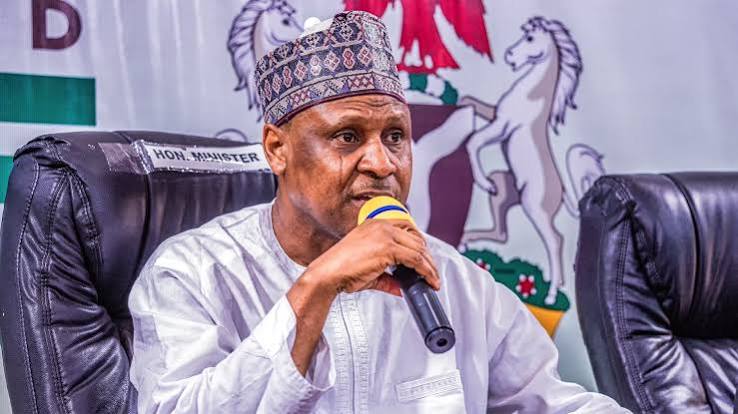
The Minister of Information and National Orientation, Mohammed Idris, has urged Nigerian editors to play a central role in protecting the credibility of the country’s democracy ahead of the 2027 general elections.
Idris said the responsibility of the media goes beyond reporting the outcome of elections, stressing that citizens must have access to credible and verified information to make informed decisions.
The minister made the remarks on Thursday, September 24, while delivering an address at the 22nd All Nigeria Editors Conference in Enugu, organised by the Nigerian Guild of Editors (NGE).
The conference has the theme, “The Ballot, the Media and the Task of Keeping Democracy Alive,” while its sub-theme focuses on detecting and debunking AI-generated disinformation before, during and after elections.
According to Idris, the growing ability of artificial intelligence to generate convincing photographs, videos, audio recordings and documents has created new challenges for journalism and democratic participation.
He warned that the danger was not limited to citizens believing false information, but also extended to a situation where people could lose confidence in genuine information.
“The task before us is bigger than protecting the credibility of one election. It is about protecting the credibility of our democracy,” Idris said.
The minister called on editors to make verification an integral part of newsroom operations, rather than treating fact-checking as an exercise carried out only after publication.
He urged journalists to establish who made a claim, examine the evidence supporting it, verify the origin and date of photographs and videos, and independently confirm information before publication.
He also advised newsrooms to clearly distinguish between facts, allegations and opinions, while ensuring that headlines accurately reflect the contents of stories.
Idris said professional journalism had become even more important as AI tools make it easier to create and distribute fabricated content at high speed.
“A false statement can be produced in the voice of a public official. A fabricated video can be circulated within minutes. An old photograph can be presented as a current event,” he said.
While urging the media to combat misinformation, Idris also said journalists should continue to scrutinise government performance.
He said the media should neither exaggerate the achievements of government nor ignore them, but should independently examine claims, ask questions and provide citizens with sufficient context to assess government policies and programmes.
The minister referenced economic reforms implemented under President Bola Tinubu’s administration, including the removal of the petrol subsidy and changes to the foreign exchange system, as areas requiring thorough reporting and public explanation.
He also cited reported government investments in infrastructure, education, human capital development and digital initiatives.
Idris said responsible journalism required reporting both progress and shortcomings rather than presenting a one-sided account of government performance.
As political parties and candidates prepare for the 2027 elections, the minister cautioned journalists against becoming participants in political contests.
He said political actors would make claims, defend their records and criticise opponents, but the responsibility of professional journalists was to establish facts, provide context and allow citizens to make their own judgments.
The minister also urged news organisations to collaborate with fact-checking organisations, technology experts, election authorities and other credible institutions to strengthen their ability to detect AI-generated content.
He called for greater investment in digital verification skills and clear newsroom procedures for handling potentially manipulated photographs, videos, audio and documents.
Idris said the Federal Ministry of Information and National Orientation was working with UNESCO and other stakeholders to strengthen media and information literacy in Nigeria.
He said such efforts were necessary because the quality of information available to citizens could have a direct impact on public trust, democratic participation and elections.
The minister noted that democracy does not begin and end at the polling station, arguing that citizens also need reliable information to understand government policies, assess public officials and participate meaningfully in governance.
His remarks came as editors and other stakeholders at the conference examined challenges facing Nigeria’s electoral process, including misinformation, AI-generated content, electoral credibility and the media’s role in democratic accountability.
Idris concluded by urging the media to ensure that technology does not become a tool for deceiving voters ahead of 2027.
“The ballot belongs to the people,” he said, adding that the media’s responsibility was to help ensure that the information surrounding the ballot is worthy of a democracy.


-

 Latest3 days ago
Full List: Meet the 2026 Nobel Prize winners across six categories
-
 Featured1 week ago
103 Million Voters: What does INEC’s new register say about Nigeria’s population?
-

 Football3 days ago
Premier League Matchweek 7: Five Fixtures That Could Shape the Weekend
-

 Business1 week ago
The Ministry of Commerce of Loveworld gets a $1 million boost for new investment fund at LTIF 2026 to promote Trade in Ghana
-

 Features1 week ago
Edo’s 2.5 million vote promise: Can the numbers match the politics?
-

 Latest2 days ago
Umahi defends Lagos-Calabar highway route changes amid public outcry
-

 Business2 days ago
Dangote Refinery IPO Extension: Was the 70% subscription report overhyped?
-

 Latest1 week ago
Nigeria to Ghana: Inside police hunt for Anambra kidnap suspect