
News
Sudanese president over-thrown by military

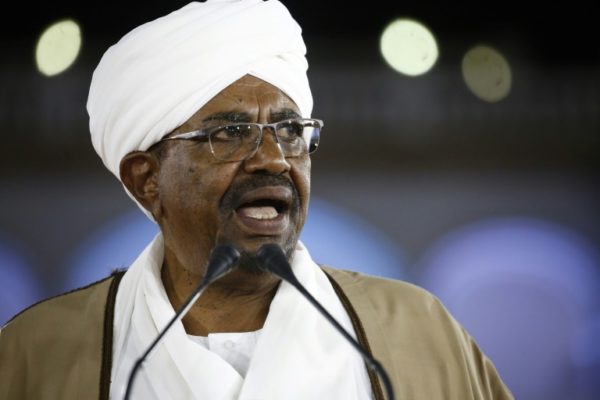
Sudanese President Omar al-Bashir has been ousted in a military coup.
Consultations are under way to form a transitional council to run the country, government sources and a provincial minister said on Thursday.
He is the second African leader, after Abdelaziz Bouteflika of Algeria to fall in the wake of mass protests.
The Minister of Production and Economic Resources in North Darfur, Adel Hussein, told the Dubai-based al-Hadath TV that “there are consultations to form a military council to take over power after President Bashir stepped down”.
Sudanese sources confirmed the report that al-Bashir was at the presidential residence under “heavy guard”.
The military will make an announcement soon, state television said as troops were deployed in Khartoum.
“The armed forces will present an important statement shortly. Be ready for it,” the announcement on state television read, without giving further details.
The army and security services deployed troops around the Defence Ministry and on major roads and bridges in the capital as thousands of people flocked to an anti-government protest outside the ministry, a witness said.
Tens of thousands of Sudanese took to the streets in the centre of Khartoum in jubilation, dancing and chanting anti-Bashir slogans.
Protesters outside the defence ministry chanted: “It has fallen, we won.”
State television and radio played patriotic music, reminding older Sudanese of how military takeovers unfolded during previous episodes of civil unrest.
Bashir, a former paratrooper who seized power in a bloodless coup in 1989, has been a divisive figure, who has managed his way through one internal crisis after another while withstanding attempts by the West to weaken him.
Sudan has suffered prolonged periods of isolation since 1993, when the U.S. added Bashir’s government to its list of terrorism sponsors for harboring Islamist militants.
Washington followed up with sanctions four years later.
Bashir has also been indicted by the International Criminal Court (ICC) in The Hague over allegations of genocide in Sudan’s Darfur region during an insurgency that began in 2003.
The latest crisis has escalated since the weekend, when thousands of demonstrators began camping out outside the Defence Ministry compound in central Khartoum, where Bashir’s residence is located.
Clashes erupted on Tuesday between soldiers trying to protect the protesters and intelligence and security personnel trying to disperse them.
The Information Ministry said a police report showed that at least 11 people died in the clashes, including six members of the armed forces.
Since Dec. 19, Sudan has been rocked by persistent protests sparked by the government’s attempt to raise the price of bread, and an economic crisis that has led to fuel and cash shortages.
Opposition figures have called for the military to help negotiate an end to Bashir’s nearly three decades in power and a transition to democracy.
The demonstrators at the defence ministry had said that they wanted to submit a petition for the armed forces to take their side in their attempt to remove Bashir and his Islamist-backed administration.


-

 Latest3 days ago
Full List: Meet the 2026 Nobel Prize winners across six categories
-
 Featured1 week ago
103 Million Voters: What does INEC’s new register say about Nigeria’s population?
-

 Football3 days ago
Premier League Matchweek 7: Five Fixtures That Could Shape the Weekend
-

 Business1 week ago
The Ministry of Commerce of Loveworld gets a $1 million boost for new investment fund at LTIF 2026 to promote Trade in Ghana
-

 Features1 week ago
Edo’s 2.5 million vote promise: Can the numbers match the politics?
-
 Latest2 days ago
Umahi defends Lagos-Calabar highway route changes amid public outcry
-

 Business2 days ago
Dangote Refinery IPO Extension: Was the 70% subscription report overhyped?
-

 Latest1 week ago
Nigeria to Ghana: Inside police hunt for Anambra kidnap suspect