
Latest
Why Lagos is struggling with waste management despite 420 PSPs — Hamzat

By Anuoluwa Amao
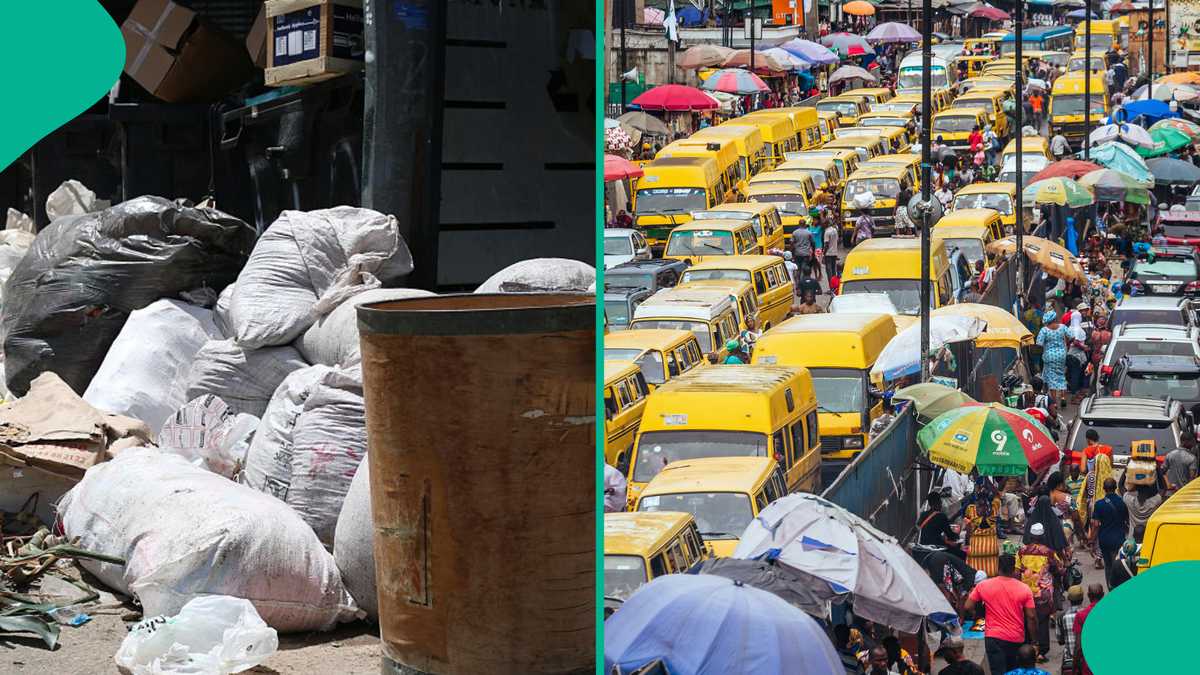
Lagos State Deputy Governor, Obafemi Hamzat, has attributed the state’s worsening waste management challenges to a surge in daily refuse generation, inadequate functional collection trucks and operational difficulties confronting private waste contractors.
Hamzat made the disclosure during an interview on Nigerian Info 99.3FM on Tuesday, while explaining the challenges facing the Lagos Waste Management Authority (LAWMA) in keeping pace with the volume of waste generated across the state.
According to the Deputy Governor, the scale of Lagos’ waste generation had significantly exceeded earlier government projections, making collection and disposal more difficult than initially anticipated.
He said the government had previously estimated that Lagos generated approximately 13,000 tonnes of waste per day but later discovered that the actual figure was closer to 17,000 tonnes.
Hamzat said the discrepancy had created significant challenges for planning and coordinating waste collection across the state.
“It’s easy for me to just throw the agency under the bus, but I won’t do that. That’s the agency that’s responsible, that we all know, LAWMA. But we’ve asked them to do a job, the scale of which we did not predict,” he said.
“And that scale is really unprecedented in this part of the world. So we thought that we are generating 13,000 tonnes on a daily basis. It turns out we are generating about 17,000.”
The Deputy Governor stressed that reliable data was essential to addressing the state’s waste management problems, arguing that authorities could not effectively plan for a challenge whose actual scale had not been accurately established.
He said the difficulty was not peculiar to Lagos, pointing to waste management challenges in other major African cities.
“As a people, the first thing we need to do is we need to organise ourselves. So how do you plan for something you can’t measure? How? So if you don’t, what you can’t measure, it’s difficult to plan and manage it,” Hamzat said.
He also highlighted the contribution of informal street activities to the state’s overall waste burden.
According to him, people who live or work on the streets, including those involved in informal activities such as street scraping and scavenging, also generate waste that must be accounted for in the state’s planning.
“So the people that sleep on the street, that man or those men or young boys that went and scraped the street, they generate refuse. How do we plan for that? How do we know?” he asked.
Beyond the challenge of accurately determining the volume of waste generated, Hamzat identified the availability of functional waste collection vehicles as another major constraint.
He disclosed that Lagos currently has about 420 Private Sector Participants (PSPs) engaged in waste collection across the state.
Under their agreements with the government, each operator is required to maintain at least two trucks for waste collection.
However, the availability and functionality of collection vehicles remain critical to the effectiveness of the system, particularly as the volume of refuse continues to increase.
The Deputy Governor’s comments suggest that even with the involvement of hundreds of private operators, the capacity of the collection network may still be inadequate to match the quantity of waste being generated daily.
The revelation that daily waste generation may be closer to 17,000 tonnes highlights the scale of the environmental management challenge confronting Africa’s most populous city.
Lagos’ dense population, rapid urbanisation and expanding commercial activities have continued to increase the amount of refuse requiring collection and disposal.
The gap between the previously estimated 13,000 tonnes and the newly cited 17,000 tonnes represents an additional 4,000 tonnes of waste every day that authorities must account for.
For LAWMA and its private-sector partners, this translates into increased pressure on collection fleets, transfer facilities, disposal sites and other components of the waste management chain.
Hamzat’s comments indicate that the state government’s response will require not only additional trucks and stronger operational capacity but also more accurate data on waste generation.
The Deputy Governor’s emphasis on measurement also points to the need for authorities to better understand how waste is generated across different parts of Lagos, including formal residential areas, markets, commercial districts and informal settlements.
With waste generation continuing to rise, the challenge for Lagos is increasingly one of matching infrastructure and collection capacity with the actual scale of the refuse produced by its growing population and economy.


-
 Latest7 days ago
Israel marks 3 years since October 7 Hamas attack amid Gaza strikes, election debate
-
 Energy7 days ago
Fuel Battle: Dangote, marketers and government clash over petrol imports
-
 Energy1 week ago
Petrol, diesel prices rise 86% in 2026 as costs hit fresh highs
-

 Latest2 days ago
Full List: Meet the 2026 Nobel Prize winners across six categories
-

 Football1 week ago
Nigeria’s World Cup exit under spotlight as FIFA’s DR Congo files emerge
-

 Latest1 week ago
US Court set to rule on release of FBI, DEA records on Tinubu
-
 Business1 week ago
Nigerian investors at a crossroads as fixed-income yields slide
-

 Latest1 week ago
Oyo APC crisis deepens as Oluyole reconciliation meeting ends in brawl